&
& 

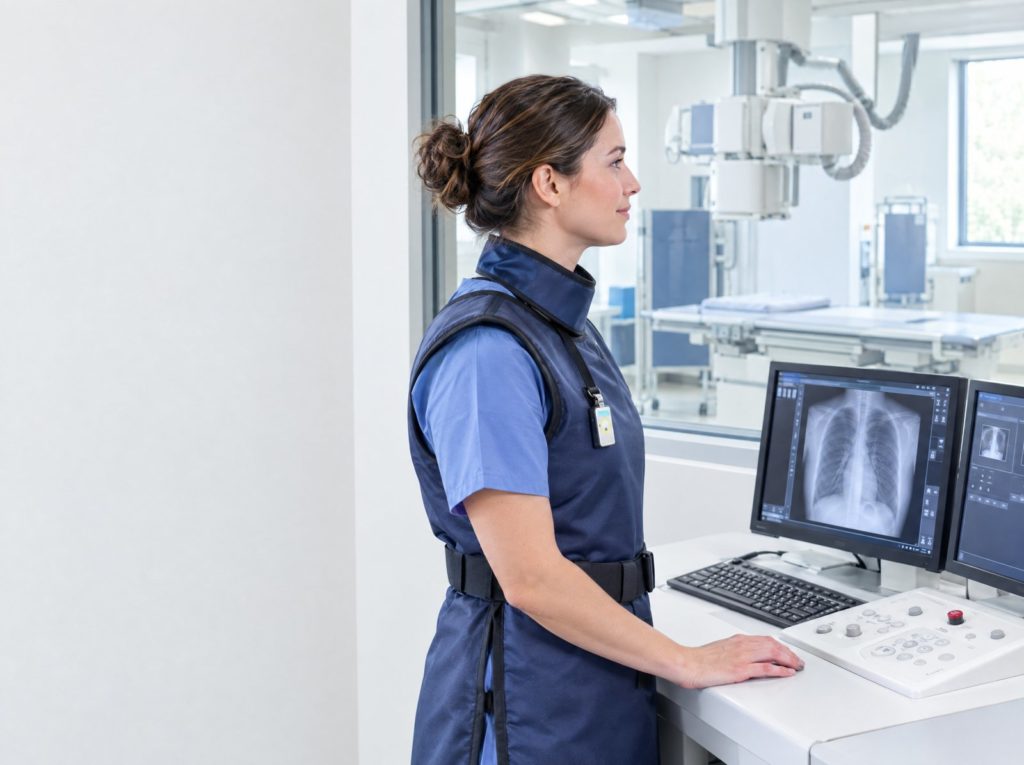
Ionising radiation includes X-rays, gamma rays and radiation from radioactive substances. It is used in medical and dental imaging, industrial radiography, gauges, research and nuclear work, and radon gas occurs naturally in some buildings. High doses cause burns and radiation sickness, and lower doses over time increase the risk of cancer. The Ionising Radiations Regulations 2017 (IRR17), in force from 1 January 2018, set out how employers must protect workers and the public.
The graded approach
| Level | Applies to | Examples |
|---|---|---|
| Notification | Lower risk work with radiation | Some work with low activity sources, and workplaces with radon above 300 Bq/m³ as an annual average |
| Registration | Most work with radiation generators and many radioactive substances | Dental and veterinary X-ray, many industrial and research uses |
| Consent | The highest risk practices | Industrial radiography, radiotherapy and other specified practices |
Employers must tell HSE, register or get consent before starting the work, depending on which level applies. Registration and consent carry a one-off fee.
Key duties
- Carry out a radiation risk assessment before starting a new activity
- Restrict exposure as far as reasonably practicable, using engineering controls first, then systems of work, then PPE
- Consult a Radiation Protection Adviser where required
- Designate controlled and supervised areas, with local rules and a Radiation Protection Supervisor
- Monitor radiation levels and keep dose records
- Prepare contingency plans for foreseeable accidents
- Give information, instruction and training
Dose limits
| Who | Annual limit (effective dose) |
|---|---|
| Employees aged 18 or over | 20 mSv |
| Members of the public | 1 mSv |
There are also separate limits for the lens of the eye (20 mSv a year for employees) and for skin and extremities (500 mSv a year for employees). Limits are a backstop: exposure must be kept as low as reasonably practicable.
Classified workers
Workers likely to receive more than 6 mSv effective dose a year, more than 15 mSv to the lens of the eye, or more than 150 mSv to the skin or extremities, must be designated as classified persons. They must have personal dosimetry through an approved dosimetry service and medical surveillance by an appointed doctor.
Pregnant and breastfeeding workers
Once an employer is told a worker is pregnant, the dose to the unborn child must be kept as low as reasonably practicable and below 1 mSv for the rest of the pregnancy. Breastfeeding workers must not be exposed to significant risk of bodily contamination. See our guide to new and expectant mothers.
Medical exposures
IRR17 protects workers and the public. The exposure of patients is covered by separate regulations, the Ionising Radiation (Medical Exposure) Regulations 2017.
The ACoP and official guidance
| Publication | Status | What it covers |
|---|---|---|
| L121 Work with ionising radiation (2nd edition, 2018) | ACoP and guidance | Notification, registration and consent, risk assessment, dose limits, designated areas, classified persons, dosimetry and contingency plans. |
An Approved Code of Practice (ACoP) has special legal status under section 16 of the Health and Safety at Work Act. If you are prosecuted and did not follow it, you must show that you met the law in some other way that was just as good. Guidance on Regulations has no special legal status, but inspectors refer to it and following it is normally enough to comply. Our guide to UK health and safety legislation lists every law and its ACoP or guidance in one place.
Training that helps
The NEBOSH National General Certificate covers radiation hazards and how they are controlled within the wider legal framework. Managers responsible for radiation work will also need specialist advice from a Radiation Protection Adviser.
Frequently asked questions
What is the annual dose limit for workers under IRR17?
20 mSv effective dose a year for employees aged 18 or over.
Who is a classified worker?
A worker likely to receive more than 6 mSv effective dose a year, or more than set limits to the eye, skin or extremities.
Does radon come under IRR17?
Yes. Workplaces with radon above 300 Bq/m³ as an annual average must notify HSE and manage the risk.
Is there an ACoP for ionising radiation?
Yes, L121 Work with ionising radiation.
Read the source
The Ionising Radiations Regulations 2017, including regulations 5 to 7, 12 and 21 and Schedule 3; HSE L121, Work with ionising radiation, Approved Code of Practice and guidance (2nd edition, 2018); and HSE guidance on notification, registration and consent. Facts checked on 7 October 2026.
Find a date that works
Every course, every centre, with live availability and prices.
On your site or ours, and group rates on request.