&


PASMA and NPORS N706 both train people to build, move, dismantle and inspect mobile access towers safely, but they are two separate schemes. If your client’s site rules ask for PASMA, book PASMA; if they ask for a recognised tower card or a card with the CSCS logo, NPORS Mobile Scaffold Towers (N706) is a one day alternative that we run at your site.
What the two schemes are
PASMA, the Prefabricated Access Suppliers’ and Manufacturers’ Association, is the trade association for the mobile access tower industry and runs its own tower training. Its one day Towers for Users course is the scheme HSE gives as an example of industry recognised tower training, and some clients name it in their site rules.
NPORS, the National Plant Operators Registration Scheme, records tower competence as category N706 Mobile Scaffold Towers. The NPORS card carries the CSCS logo when the holder has also passed a CITB (or NPORS) Health, Safety and Environment test within the two years before the card application. Both schemes are about the same thing: getting a tower up, using it and taking it down without anyone standing on an unprotected platform.
Which one should you book?
Check your client’s site rules first. If they say PASMA, book PASMA: NPORS N706 is a different card and we will not tell you otherwise. If they ask for a recognised tower card, or a card with the CSCS logo, NPORS N706 fits. Ask for the requirement in writing, because it saves training the same people twice. We run NPORS, not PASMA, so N706 is the tower course you can book with us.
What NPORS N706 covers
- Components, their condition and spotting anything damaged or from another system
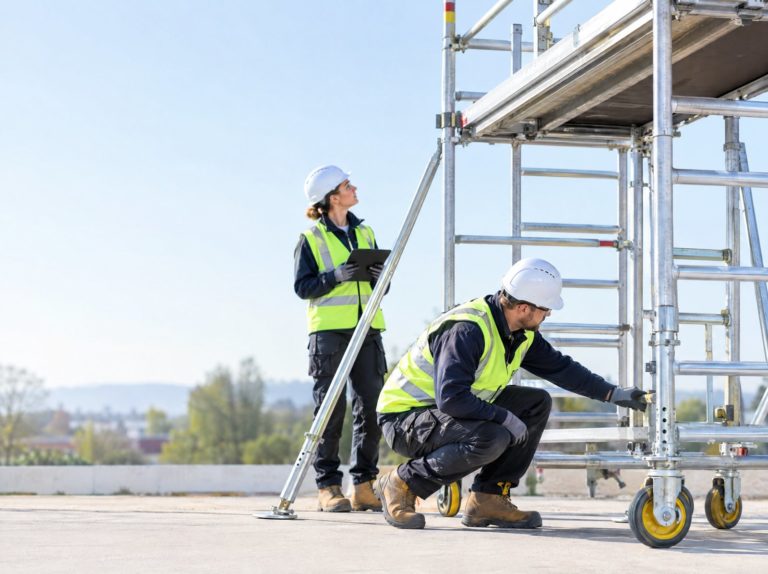
- A safe base, stabilisers and outriggers
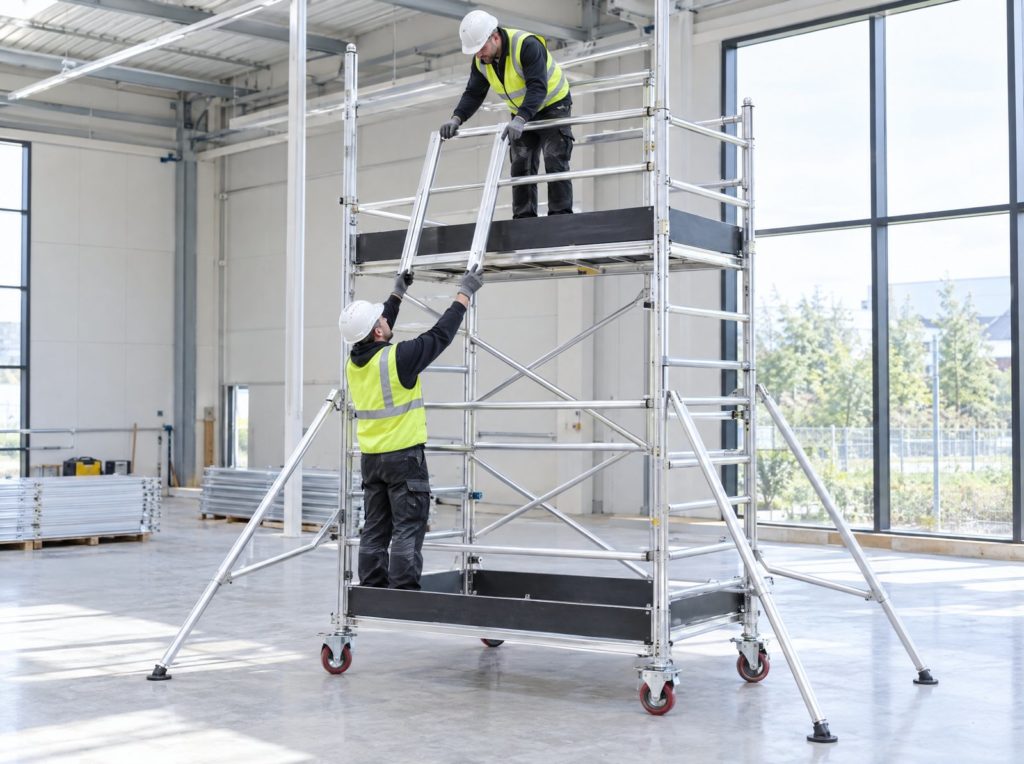
- Safe build methods (through the trap or advance guardrail), so nobody stands on an unguarded platform
- Guardrails, toe boards and ties where needed
- Moving, altering and dismantling the tower
- Pre-use checks and interval inspections, and how to record them
| Course detail | NPORS N706 with Acadame |
|---|---|
| Length | One day |
| Group size | Up to six with one instructor and one tower; up to eight on the experienced worker test |
| Where | Your site, on your own towers, or a venue near you |
| Test | NPORS theory and practical test, both with us as an NPORS test centre |
Five tower rules worth knowing
- Build to the manual. The manufacturer’s instruction manual sets the safe build method, bracing, stabilisers and maximum height, and it must be kept on site with the tower.
- Never stand on an unguarded platform. Fit guardrails from the level below and come up through the trapdoor, or use advance guardrail units.
- Nobody rides a tower. HSE is clear: never move a tower while people or materials are on it, or in windy conditions. Check the route and overhead clearance first.
- Do not mix systems. HSE says never use a tower with incompatible components. Unless the manufacturer’s manual specifically certifies parts from another system, use only the components that belong to that tower.
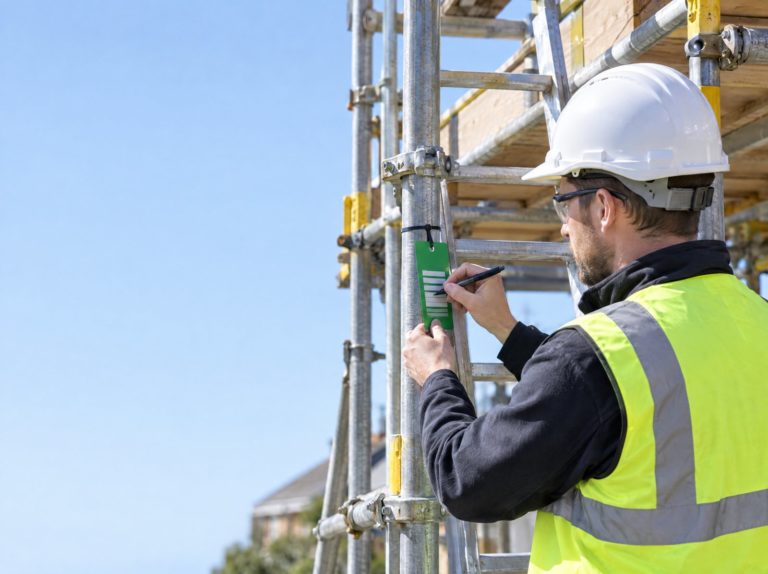
- Inspect it. For construction work where someone could fall two metres or more, the Work at Height Regulations 2005 require an inspection after assembly before first use, at least every seven days, and after anything liable to affect its safety, such as bad weather. See our guide to scaffold tags for how inspection status is shown on site.
How high can a tower go?
BS EN 1004-1:2020, the standard for mobile access and working towers, covers towers up to eight metres outdoors and twelve metres indoors. The height any particular tower can safely reach comes from its own manual, based on its base size and the stabilisers fitted.
The law behind it
The duty to plan, supervise and inspect work at height comes from the Work at Height Regulations 2005. A tower card shows someone has been trained; it does not replace a plan for the job. For staff who work at height more generally, NPORS Safe Working at Height (N404) covers the wider picture, and NPORS N711 Safe Use of Stepladders and Ladders covers ladders and stepladders.
Running it for a team
Training on your own towers is usually the better option, because people learn on the system they will actually use, with its own manual. NPORS courses are run to order, so we fit around your programme rather than a fixed timetable, at your site or at our centres in Stoke-on-Trent, Manchester, Liverpool or Derby. If anyone needs the CSCS logo version of the card, we can also book the Health, Safety and Environment test.
Frequently asked questions
Is NPORS N706 the same as PASMA?
No. They are two different schemes covering the same work. Check your client’s site rules and book whichever they ask for.
How long is mobile tower training?
NPORS N706 is one day, for up to six people with one instructor and one tower (up to eight on the experienced worker test). The PASMA Towers for Users course is also one day.
How often must a mobile tower be inspected?
For construction work where someone could fall two metres or more: after assembly before first use, at least every seven days, and after anything liable to affect its safety.
Can someone stay on a tower while it is moved?
No. Everyone gets off and materials are removed before a tower is moved, and it should not be moved in windy conditions.
Read the source
Sources: the Work at Height Regulations 2005 (regulation 12) on legislation.gov.uk, HSE guidance on tower scaffolds and construction work at height, PASMA’s Towers for Users course page and its BS EN 1004-1:2020 product standard FAQs, NPORS card information, and the Acadame NPORS N706 course page. Facts checked on 9 November 2026.
Build your NPORS course
Tell it who is coming and it works out the days, the ratio and how many times it has to run.
Your site or ours. Quoted per group, not per head.