&
& 


There is no real difference between a fire warden and a fire marshal. Both names describe the same job: a trained member of staff who helps prevent fires day to day and makes sure everyone gets out safely when the alarm goes, and the law doesn’t use either word.
Some businesses say warden, some say marshal, and plenty use both on the same fire action notice. Government fire safety guidance for offices and shops lumps them together as “fire marshals or wardens”. So fire warden training and fire marshal training are the same course. What matters is whether your people are competent to do the job.
What the law actually says
In England and Wales the main law for workplaces is the Regulatory Reform (Fire Safety) Order 2005, usually called the Fire Safety Order. It places duties on the “responsible person”, which in most workplaces is the employer. It never mentions wardens or marshals. Instead it talks about competent persons, and it asks for them in a few places:
- Article 13 (fire-fighting and fire detection): you must nominate competent persons to carry out your fire-fighting measures, and make sure their number, training and equipment are adequate for the size of the premises and its hazards.
- Article 15 (serious and imminent danger): you must nominate a sufficient number of competent persons to put your evacuation procedures into practice.
- Article 18 (safety assistance): you must appoint one or more competent persons to help you with your preventive and protective measures.
- Article 21 (training): staff must get adequate fire safety training when they start and when they face new or increased risks, repeated periodically where appropriate, and during working hours.
The Order defines a competent person as someone with “sufficient training and experience or knowledge and other qualities” to do the job properly. Your fire wardens are how most employers meet articles 13 and 15.
You may also have heard of the Fire Safety (England) Regulations 2022. They came into force on 23 January 2023, but they are aimed at multi-occupied residential buildings (things like fire door checks and information for residents). They don’t set rules for workplace fire wardens. Scotland has its own legislation, the Fire (Scotland) Act 2005, so check that if your sites are north of the border.
How many fire wardens do you need?
There is no fixed legal ratio. You’ll see figures quoted online, but none of them come from the law. The Order simply says you need a “sufficient” number, taking into account the size of the premises and the specific hazards.
That number comes out of your fire risk assessment. Things that push it up include:
- several floors, wings or buildings, each needing its own sweep
- higher-risk activities such as hot work, flammable stores or cooking
- members of the public or visitors who don’t know the building
- people who need help to evacuate
- shift patterns, part-time staff, holidays and sickness (a warden who is off isn’t covering anyone)
A practical test: on your quietest shift, with one person off sick, is every area still covered? If not, you need more wardens or better cover arrangements. Record who they are in your emergency plan, because the guidance expects the risk assessment to note anyone nominated to carry out a particular function.
What a fire warden does: before, during and after an alarm
Before
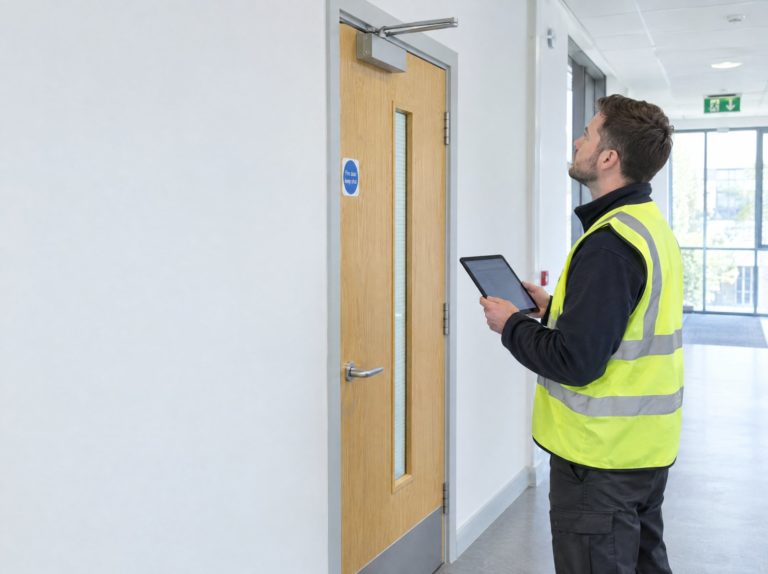
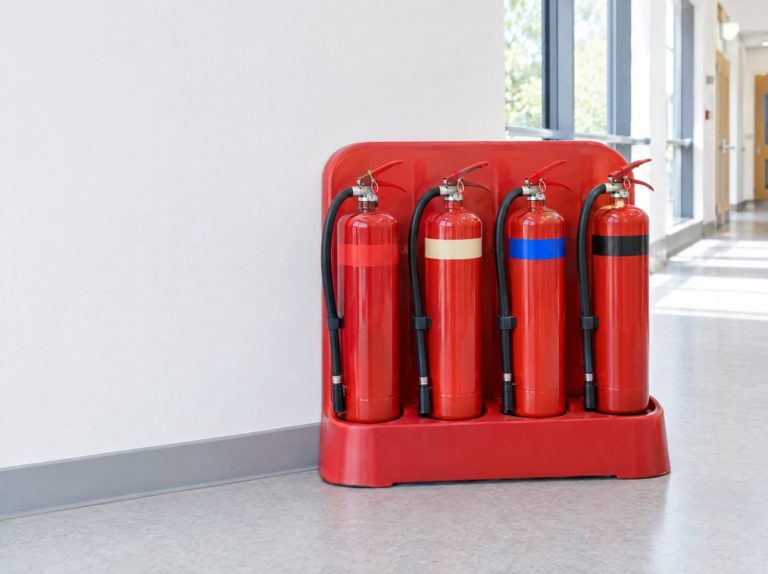
Most of the job is prevention, and most of it goes unnoticed. Walking the area, spotting blocked escape routes and wedged-open fire doors, checking extinguishers are in place, keeping rubbish and combustibles under control, and reporting faults.
During
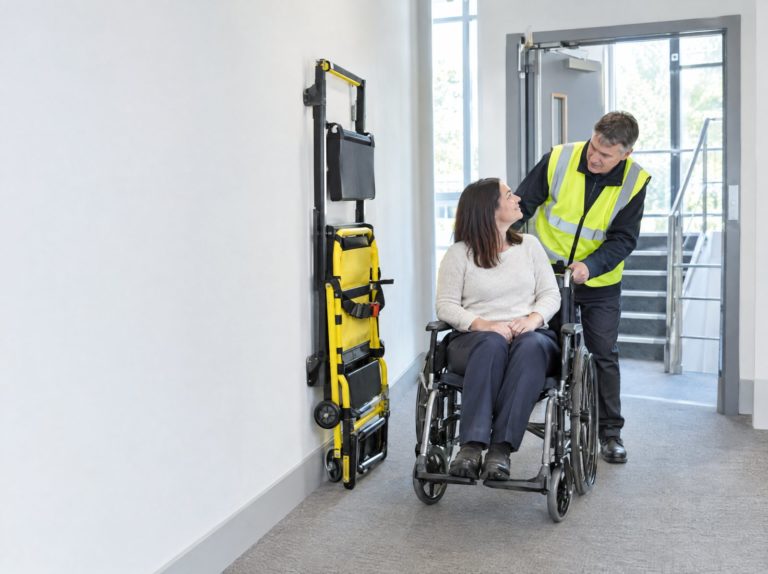
When the alarm sounds, the warden follows the procedures in your emergency plan: directing people to the nearest safe exit, sweeping their allocated area (toilets, stores, meeting rooms), helping visitors and anyone who needs assistance, and closing doors behind them. They only tackle a fire with an extinguisher if they’re trained, it’s small, and your procedures allow it. Nobody goes back in.
After
At the assembly point, wardens report that their area is clear (or not), help with the roll call, and pass accurate information to the fire and rescue service when they arrive. Afterwards they feed back what went wrong, which is exactly why drills matter. Government guidance says you should carry out at least one fire drill a year and record the results.
What fire warden training covers
Government guidance says staff with a supervisory role in a fire, including fire marshals or wardens, should be given details of your fire risk assessment and receive additional training beyond the basic staff briefing. Good fire warden training covers how fires start and spread, extinguisher types and when (not) to use them, your duties under the law, and the practical side: sweeps, roll calls and escape routes.
Our fire warden and marshal course is a half day, run at our centres in Stoke-on-Trent, Derby, Manchester and Liverpool, or onsite at your premises. If your wardens work in construction and you want the training recorded on an NPORS card, there is also an NPORS N703 Fire Warden route.
How often should fire warden training be refreshed?
The law doesn’t give a set interval. Article 21 says training should be repeated periodically where appropriate and adapted to new or changed risks. In practice, refresh it:
- at the interval your fire risk assessment sets (we recommend yearly)
- when you move premises, change the layout or change your procedures
- when a drill or real alarm shows gaps
- when a warden takes on a new area or new risks
For the person managing fire safety: NEBOSH fire safety course
Wardens carry out the plan. Someone still has to write it and carry out or check the fire risk assessment, which is a bigger job than a half-day course prepares you for.
The NEBOSH Certificate in Fire Safety is aimed at people responsible for fire safety in low to medium risk workplaces, such as health and safety managers, facilities managers and safety representatives. It sits at Level 3 and has two units: FSC1, an open book examination, and FSC2, a practical fire risk assessment of a workplace. If you are the one your fire wardens report to, this is the NEBOSH certificate in fire safety to look at.
Fire warden FAQs
Is it a legal requirement to have a fire warden?
The law requires you to nominate a sufficient number of competent persons to implement your evacuation and fire-fighting measures. It doesn’t require the title “fire warden”, but for most workplaces trained wardens are how that duty is met.
Is there a legal ratio of fire marshals to staff?
No. The number depends on your premises, hazards, people and shift patterns, and should be set by your fire risk assessment.
Can fire warden training be done onsite?
Yes. Acadame runs fire warden training onsite anywhere in the UK as well as at our centres, so your team can walk their own escape routes as part of the course.
Does a fire warden need the NEBOSH fire certificate?
Not usually. Wardens need practical warden training. The NEBOSH Certificate in Fire Safety is for the person who manages fire safety and carries out or oversees fire risk assessments.
Training that covers this
- Fire Warden / Marshal Training: half day, at our centres or onsite
- NEBOSH Certificate in Fire Safety: for the person managing fire safety
- NPORS N703 Fire Warden: the NPORS route
Read the source
- The Regulatory Reform (Fire Safety) Order 2005 (legislation.gov.uk)
- Fire safety in the workplace (GOV.UK)
- Fire safety risk assessment: offices and shops (GOV.UK)
- NEBOSH Certificate in Fire Safety (NEBOSH)
Find a date that works
Every course, every centre, with live availability and prices.
On your site or ours, and group rates on request.