&
& 

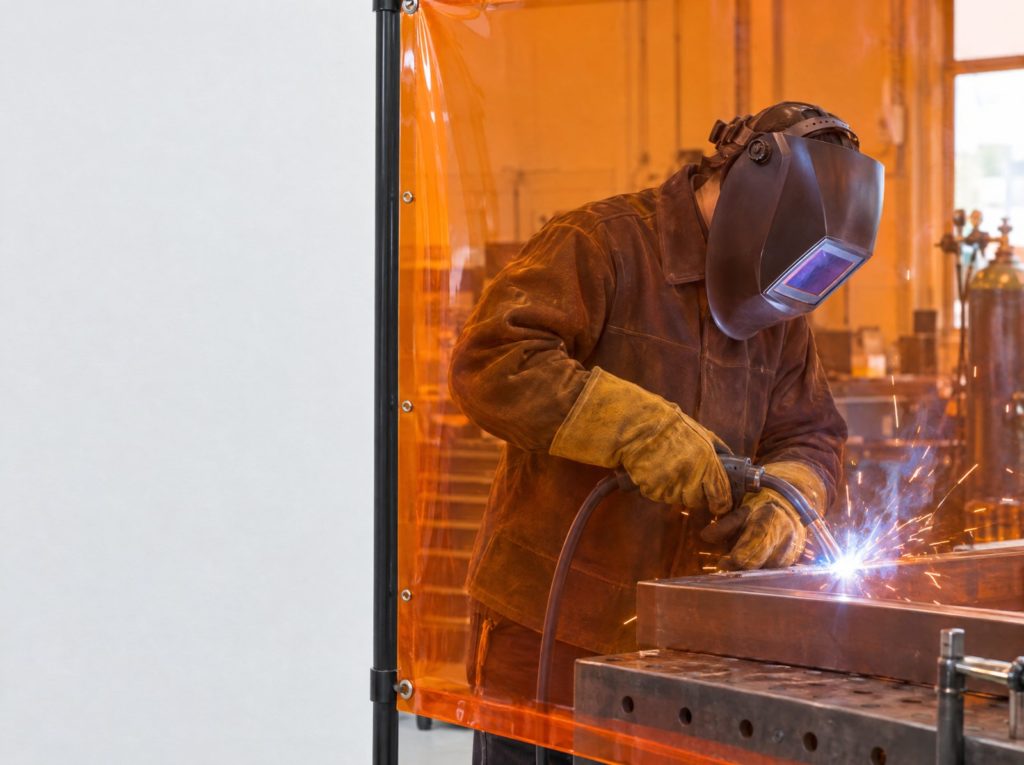
Artificial optical radiation is ultraviolet, visible and infrared light from man-made sources. The Control of Artificial Optical Radiation at Work Regulations 2010 (AOR) protect workers from harm to the eyes and skin from hazardous sources. They came into force on 27 April 2010.
Which sources are hazardous?
| Usually safe | Potentially hazardous |
|---|---|
| Ceiling lighting, desk lamps and computer screens | Welding and plasma cutting arcs |
| Photocopiers and vehicle lights | Class 3B and Class 4 lasers |
| Most LED and fluorescent lighting | Industrial UV curing, UV sterilisation lamps |
| Projectors used normally | Furnaces, molten metal and glass, high power infrared heaters |
| Some medical and cosmetic light sources, such as intense pulsed light |
For most workplaces using only everyday sources, no further action is needed beyond the normal risk assessment.
Effects on the body
- Arc eye (photokeratitis), a painful burn of the cornea from UV, common in welding
- Skin burns and reddening
- Retinal damage from lasers and intense sources, which can be permanent
- Cataracts from long-term infrared or UV exposure
- Increased risk of skin cancer from long-term UV exposure
What employers must do
- Assess the risk where workers could be exposed to hazardous sources.
- Eliminate the risk or reduce it to as low as reasonably practicable, using enclosures, screens, interlocks, distance and time first, then PPE such as welding helmets and laser eyewear.
- Make sure exposure does not exceed the exposure limit values in the Schedules.
- Mark and restrict access to areas where the limits could be exceeded.
- Give information and training on the risks and controls.
- Arrange medical examination if a worker is overexposed, and health surveillance where appropriate.
Sunlight
The regulations cover artificial sources only. Outdoor workers’ exposure to sunlight is managed through the general duties in the Management Regulations, for example with shade, clothing and sun protection.
The ACoP and official guidance
| Publication | Status | What it covers |
|---|---|---|
| HSE guidance for employers on the AOR Regulations | Guidance, not an ACoP | Which sources are safe, which need assessment, controls and the exposure limit values. Laser safety standards such as BS EN 60825 also apply. |
An Approved Code of Practice (ACoP) has special legal status under section 16 of the Health and Safety at Work Act. If you are prosecuted and did not follow it, you must show that you met the law in some other way that was just as good. Guidance on Regulations has no special legal status, but inspectors refer to it and following it is normally enough to comply. Our guide to UK health and safety legislation lists every law and its ACoP or guidance in one place.
Training that helps
The NEBOSH National General Certificate covers radiation hazards, including optical radiation, and IOSH Managing Safely covers risk assessment for managers. Our guide to PPE covers eye protection.
Frequently asked questions
Do office lights and computer screens need an AOR assessment?
No. HSE classes them as safe, so no specific action is needed.
Does welding come under the AOR Regulations?
Yes. Welding arcs are a common hazardous source of UV and visible light.
Do the AOR Regulations cover sunlight?
No, only artificial sources. Sunlight is managed under general health and safety duties.
Is there an ACoP for artificial optical radiation?
No. HSE publishes guidance for employers.
Read the source
The Control of Artificial Optical Radiation at Work Regulations 2010 and HSE guidance for employers on the AOR Regulations. Facts checked on 7 October 2026.
Find a date that works
Every course, every centre, with live availability and prices.
On your site or ours, and group rates on request.