&
& 

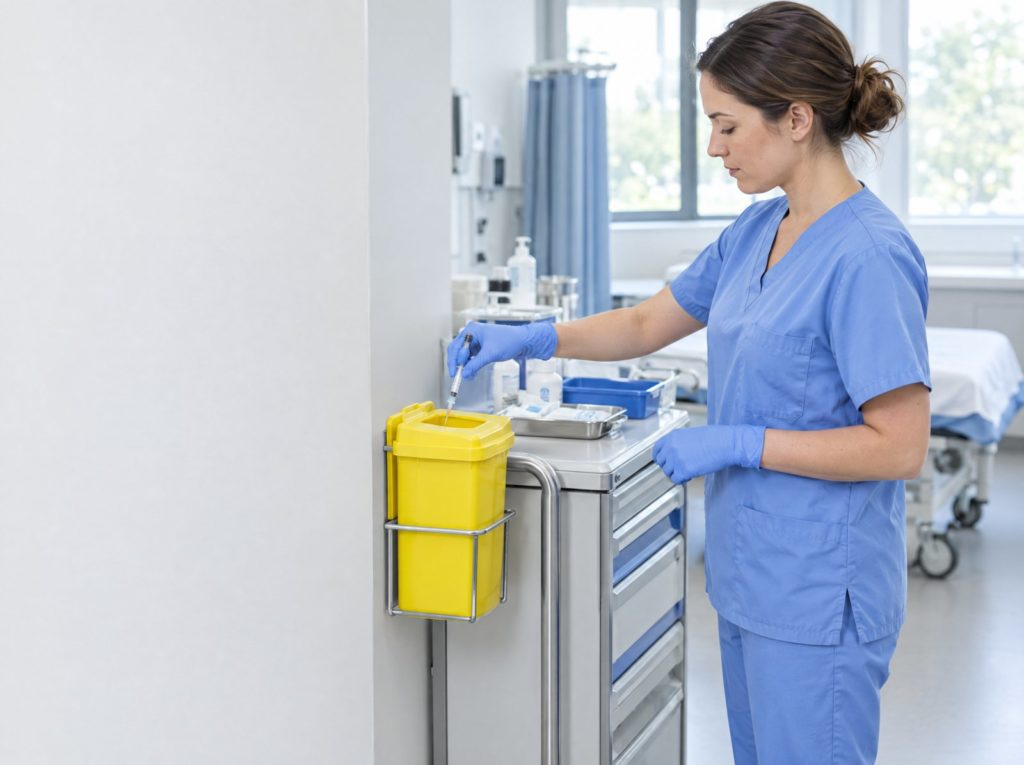
Sharps injuries, such as needlesticks and cuts from scalpels, can expose healthcare workers to blood-borne viruses including hepatitis B, hepatitis C and HIV. The Health and Safety (Sharp Instruments in Healthcare) Regulations 2013 add specific duties to the existing requirements of COSHH and the Management Regulations.
Who do they apply to?
Employers whose main activity is the management, organisation or provision of healthcare, such as hospitals, GP practices, dental practices and care providers delivering healthcare, and contractors working for them.
What employers must do
| Duty | What it means |
|---|---|
| Avoid unnecessary sharps | Use alternatives where possible, such as needle-free systems. |
| Use safer sharps | Where sharps are needed, use devices with built-in safety features where reasonably practicable. |
| No recapping | Needles must not be recapped after use unless the risk has been assessed and controlled, for example with a recapping device. |
| Safe disposal | Place secure, clearly marked sharps containers close to where sharps are used. |
| Information and training | Explain the risks, safe use, disposal and what to do after an injury. |
| Respond to injuries | Record and investigate injuries, give immediate access to medical advice, offer post-exposure treatment where needed, and consider counselling. |
Employee duties
Employees must report any sharps injury to their employer as soon as practicable, so that treatment can be given quickly and the cause investigated.
After a needlestick injury
- Encourage the wound to bleed gently. Do not suck it.
- Wash it under running water with soap.
- Cover it with a waterproof dressing.
- Report it immediately and get urgent medical advice, as post-exposure treatment works best when started quickly.
- Record the injury and the source, if known.
Is a sharps injury reportable under RIDDOR?
A sharps injury must be reported as a dangerous occurrence under RIDDOR if the source is known to contain a blood-borne virus. If the injured person goes on to develop an infection, it is reportable as a disease.
The ACoP and official guidance
| Publication | Status | What it covers |
|---|---|---|
| HSIS7 Health and Safety (Sharp Instruments in Healthcare) Regulations 2013: Guidance for employers and employees | Guidance, not an ACoP | Who the regulations apply to, each duty, and what to do after an injury. |
An Approved Code of Practice (ACoP) has special legal status under section 16 of the Health and Safety at Work Act. If you are prosecuted and did not follow it, you must show that you met the law in some other way that was just as good. Guidance on Regulations has no special legal status, but inspectors refer to it and following it is normally enough to comply. Our guide to UK health and safety legislation lists every law and its ACoP or guidance in one place.
Training that helps
Our infection prevention and control eLearning covers sharps safety and blood-borne viruses, and our First Aid at Work course covers wound care. Managers in healthcare settings will find risk assessment and COSHH covered by IOSH Managing Safely.
Frequently asked questions
Do the Sharps Regulations apply to all employers?
No. They apply to employers whose main activity is healthcare, and their contractors. Other employers manage sharps risks under COSHH.
Can needles be recapped?
Not unless the risk has been assessed and controlled, for example by using a recapping device.
Is a needlestick injury reportable under RIDDOR?
Yes, as a dangerous occurrence, if the source is known to contain a blood-borne virus.
Is there an ACoP for sharps?
No. HSE publishes HSIS7, which is guidance.
Read the source
The Health and Safety (Sharp Instruments in Healthcare) Regulations 2013 and their explanatory note; HSE HSIS7, Health and Safety (Sharp Instruments in Healthcare) Regulations 2013: Guidance for employers and employees; and HSE guidance on reporting sharps injuries under RIDDOR. Facts checked on 7 October 2026.
Find a date that works
Every course, every centre, with live availability and prices.
On your site or ours, and group rates on request.