&


Confined space training comes in levels: awareness for people who work near confined spaces, then low, medium and high risk training for people who go in. The right level comes from your risk assessment of the actual spaces and the work, not from the course price.
First, what counts as a confined space?
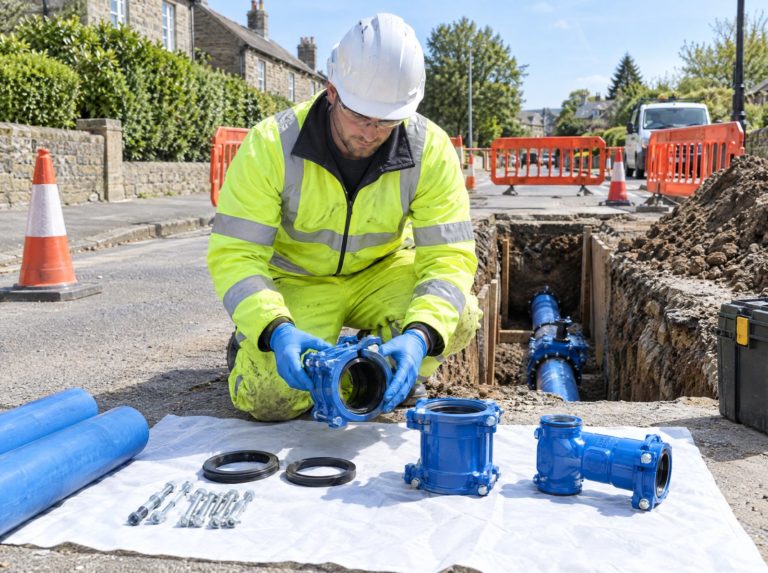
Under the Confined Spaces Regulations 1997, a confined space is any place, such as a chamber, tank, silo, pit, trench, sewer or well, where its enclosed nature creates a reasonably foreseeable specified risk. The specified risks are serious injury from fire or explosion; loss of consciousness from a rise in body temperature; loss of consciousness or asphyxiation from gas, fume, vapour or lack of oxygen; drowning from a rising level of liquid; and asphyxiation from, or entrapment by, a free flowing solid such as grain or sand.
Size is not the test. A large unventilated plant room can be a confined space. Our guide to confined spaces law covers the duties in more detail.
The four levels at a glance
The Regulations themselves do not set training levels. Low, medium and high risk are an industry classification used by training schemes such as NPORS, and the water industry uses its own similar classes (NC1 to NC4, set out in Water UK guidance). Whichever scheme you use, the tier comes from the risk assessment for the space.
| Level | What it means |
|---|---|
| Awareness | Recognise a confined space and know not to go in. Does not allow entry. |
| Low risk | Adequate ventilation, simple access, no flooding risk, no special entry or rescue equipment. Meter and valve chambers, pits, cellars. |
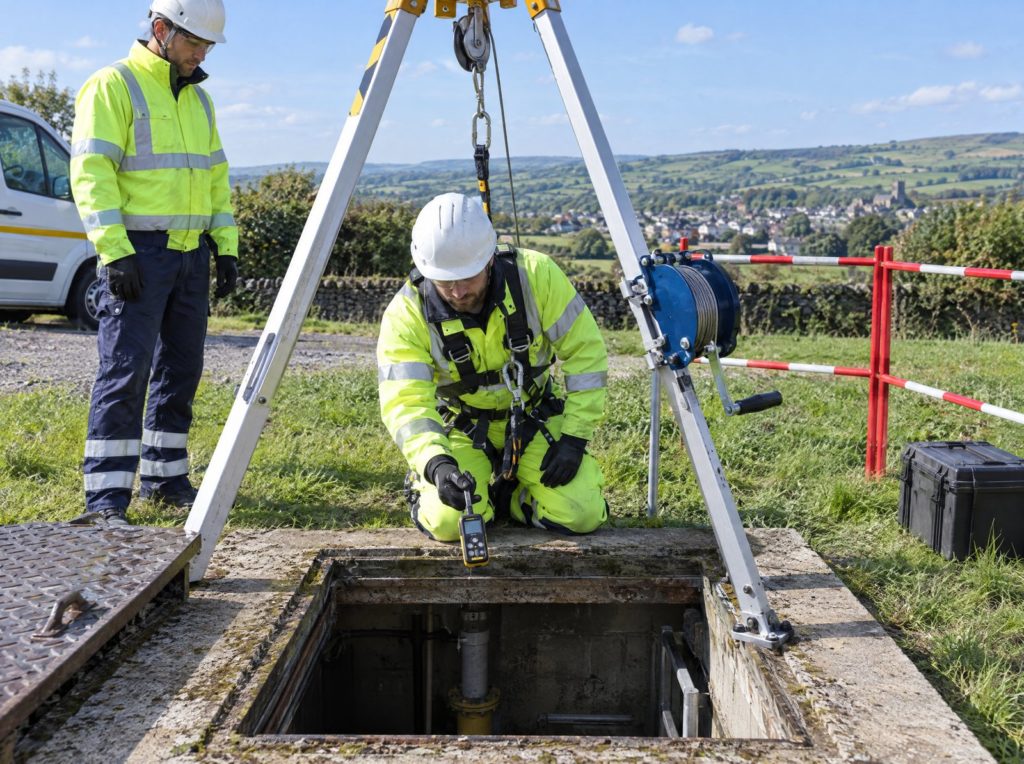
| Medium risk | A specified risk exists but is controlled. Escape breathing apparatus may be needed, entry is by tripod and winch or retrieval line, and someone outside is dedicated to managing the entry. |
| High risk | Hazards cannot be removed or controlled enough to trust the atmosphere, breathing apparatus is worn throughout, and rescue cover is on site. |
Awareness: for people who work nearby
HSE points out that the people killed in confined spaces include those who try to rescue colleagues without proper training and equipment. Awareness training is built to stop that. It does not teach entry; it teaches people to recognise a confined space, understand permits and raise the alarm instead of climbing in. We run Confined Space Awareness as a half-day course at your site or our centres, or as eLearning that takes about 30 to 45 minutes.
Low, medium and high risk: for people who go in
Entry training is matched to the space. As an NPORS approved training provider and test centre, we deliver all three tiers under NPORS category N702, often referred to as N702A (low), N702B (medium) and N702C (high). Because published lengths vary widely between providers, we set the length when we quote, based on your spaces, your equipment and your crew’s experience.
- Low risk: if the assessment says escape breathing apparatus is needed, the job is not low risk. Someone still stays at the entry point, ready to raise the alarm.
- Medium risk: the person managing the entry from outside is a trained role, not whoever is nearest the van.
- High risk: people are normally expected to have experience at the lower tiers first, and must be medically fit for breathing apparatus work and face fit tested for any tight-fitting facepiece they wear.
How to choose
- List the spaces your people enter or work beside.
- Check each risk assessment for ventilation, access, flooding and breathing apparatus.
- Match the level to the worst space each crew enters. Different crews may need different tiers.
- Train on your own kit where you can: detectors, tripods and escape sets all differ.
The rule that never changes
At every level the order is the same, and it comes straight from the Regulations: avoid entry if the work can reasonably be done another way, use a safe system of work if it cannot, and have suitable rescue arrangements in place before anyone goes in.
Frequently asked questions
Does awareness training allow someone to enter a confined space?
No. It is for people working near confined spaces. Entry needs training matched to the risk level of the space.
How long is the confined space awareness course?
Half a day in the classroom, or about 30 to 45 minutes as eLearning.
What makes a confined space low risk?
A risk assessment showing adequate ventilation, simple access, no flooding risk and no need for specialist entry or rescue equipment, including escape breathing apparatus.
Do people need the lower tiers before high risk?
Normally yes. High risk entry in breathing apparatus is not the place to learn gas testing, permits and entry discipline, and entrants also need to be medically fit and face fit tested for their apparatus.
Read the source
Sources: the Confined Spaces Regulations 1997 (legislation.gov.uk), HSE leaflet INDG258 and Approved Code of Practice L101, Energy and Utility Skills (EUSR) guidance on the water industry National Classifications, and Acadame’s Confined Space Awareness, eLearning and NPORS N702 course pages. Facts checked on 9 November 2026.
Find a date that works
Every course, every centre, with live availability and prices.
On your site or ours, and group rates on request.