&
& 

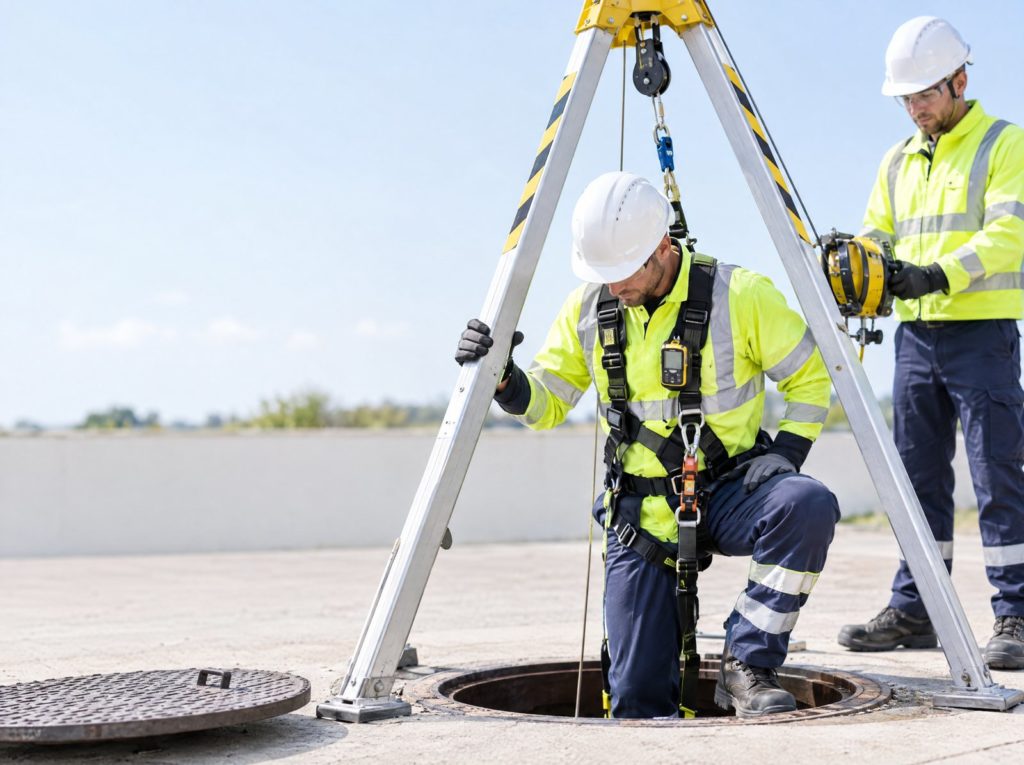
A confined space is not just somewhere small or awkward. Under the Confined Spaces Regulations 1997, it is a place that is substantially enclosed, though not always entirely, where there is a reasonably foreseeable risk of serious injury from hazardous substances or conditions. Every year people die in confined spaces, and many of them are would-be rescuers who go in to help without the right equipment.
The specified risks
A space only counts as a confined space if one or more of these risks is reasonably foreseeable:
- Serious injury from fire or explosion
- Loss of consciousness from increased body temperature
- Loss of consciousness or asphyxiation from gas, fume, vapour or lack of oxygen
- Drowning from a rise in the level of liquid
- Asphyxiation or entrapment from a free-flowing solid, such as grain or sand
Examples on construction and maintenance sites
- Manholes, sewers, drains and inspection chambers
- Tanks, vessels, silos and hoppers
- Ducts, voids and unventilated basements or plant rooms
- Deep or poorly ventilated excavations and trenches
- Roof voids or rooms where solvents, adhesives or gas welding are used without ventilation
Some of these, such as an open trench, are not always confined spaces. It depends on whether a specified risk is reasonably foreseeable, so the risk assessment decides.
What the law requires
| Duty | What it means |
|---|---|
| Avoid entry | Do not enter a confined space if the work can reasonably be done another way, for example with remote cameras, long-handled tools or by doing the work from outside. |
| Safe system of work | If entry is unavoidable, it must be carried out under a safe system of work based on a suitable risk assessment. |
| Emergency arrangements | Suitable rescue arrangements must be in place before anyone enters, including equipment, trained people and a way to raise the alarm. |
What a safe system for entry usually includes
- A competent person in charge and a permit to work for high-risk entries
- Isolation of pipes, power and moving parts, with locks and tags
- Cleaning or purging the space where needed
- Gas testing before and during entry, with a calibrated monitor for oxygen, flammable gases and toxic gases such as hydrogen sulphide and carbon monoxide
- Ventilation, natural or forced
- Suitable equipment: lighting, communication, breathing apparatus where needed, harness and lifeline
- A trained person stationed outside to keep watch and raise the alarm
- Rescue equipment and trained rescuers ready before entry, not called for after something goes wrong
Gas hazards to know
| Hazard | Why it matters |
|---|---|
| Oxygen deficiency | Normal air contains about 20.9% oxygen. Rust, decaying material or displacement by other gases can lower it to dangerous levels without any warning signs. |
| Oxygen enrichment | Leaking oxygen cylinders can raise oxygen levels and make clothing and materials burn fiercely. |
| Hydrogen sulphide | Common in sewers. Toxic, and at higher concentrations it deadens the sense of smell, so you cannot rely on the rotten egg smell. |
| Carbon monoxide | From engines and generators. Odourless and toxic. |
| Methane and other flammable gases | Risk of fire and explosion. |
Rescue: why it must be planned first
The natural reaction when someone collapses in a confined space is to go in after them. Without breathing apparatus, the rescuer is likely to be overcome by the same atmosphere. That is why the law requires rescue arrangements before entry, and why anyone standing by must be trained to raise the alarm and use the rescue equipment, not to enter unprotected.
The ACoP and official guidance
| Publication | Status | What it covers |
|---|---|---|
| L101 Safe work in confined spaces (3rd edition, 2014) | ACoP and guidance | Avoiding entry, safe systems of work, permits, atmospheric testing, ventilation, rescue arrangements and training. |
An Approved Code of Practice (ACoP) has special legal status under section 16 of the Health and Safety at Work Act. If you are prosecuted and did not follow it, you must show that you met the law in some other way that was just as good. Guidance on Regulations has no special legal status, but inspectors refer to it and following it is normally enough to comply. Our guide to UK health and safety legislation lists every law and its ACoP or guidance in one place.
Training that helps
Our classroom confined space awareness course is a good starting point. Anyone entering or supervising a confined space needs specific training and a recognised qualification for the level of risk involved. Our permit to work eLearning covers how entry permits work. For managers, confined spaces are covered in the NEBOSH National General Certificate and the NEBOSH Health and Safety Management for Construction certificate.
Where this fits in SMSTS and SSSTS
Confined spaces are tested on both papers, including avoiding entry and emergency arrangements. Our free SMSTS mock test and SSSTS mock test let you check your knowledge before the course or a refresher, and you can email yourself the results sheet at the end.
When you are ready, the five day SMSTS course is for site managers and the two day SSSTS course is for supervisors. If your certificate is due, the SMSTS refresher and SSSTS refresher keep it current.
Frequently asked questions
What is a confined space?
A substantially enclosed place where there is a reasonably foreseeable risk of serious injury from hazardous substances or conditions, such as lack of oxygen, toxic gas, fire, drowning or free-flowing solids.
Is a trench a confined space?
It can be. A trench becomes a confined space if a specified risk is reasonably foreseeable, for example gas building up in a deep, poorly ventilated excavation.
What are the Confined Spaces Regulations 1997?
The regulations that require employers to avoid entry where possible, use a safe system of work where entry is needed, and have emergency arrangements in place before entry.
Why do rescuers die in confined spaces?
Because they go in without breathing apparatus and are overcome by the same atmosphere. Rescue must be planned and equipped before anyone enters.
Read the source
The Confined Spaces Regulations 1997 (SI 1997/1713), regulations 1 to 5; HSE Approved Code of Practice and guidance L101, Safe work in confined spaces; and HSE leaflet INDG258, Confined spaces: a brief guide to working safely. Facts checked on 6 October 2026.
Find a date that works
Every course, every centre, with live availability and prices.
On your site or ours, and group rates on request.