&
& 

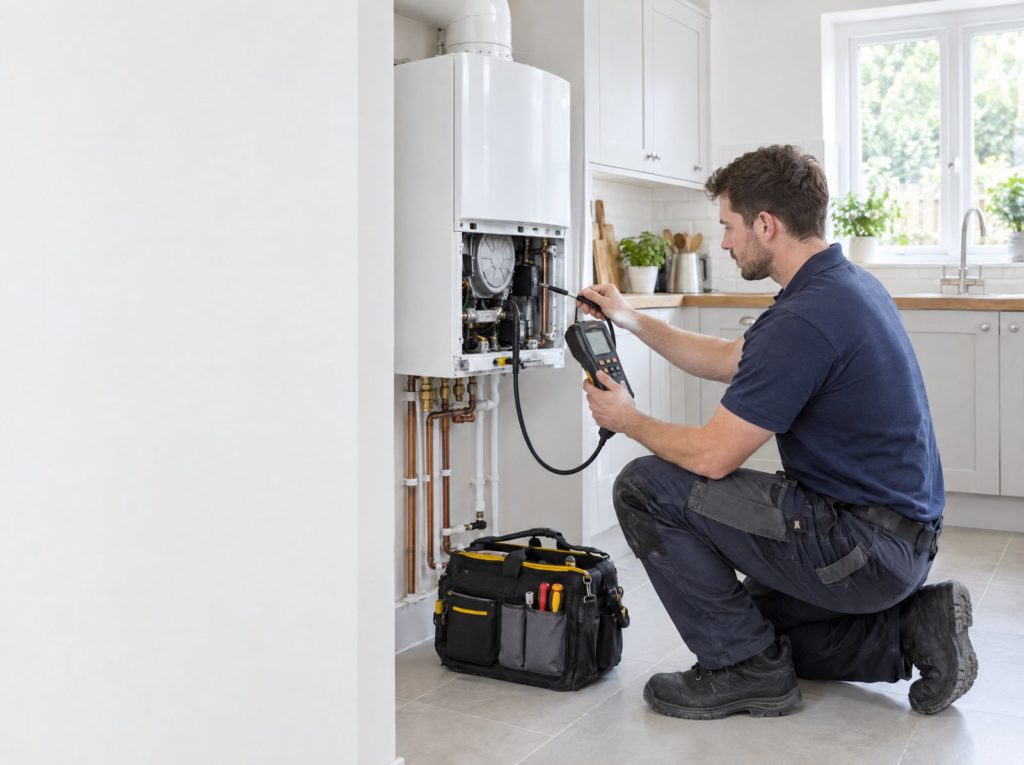
The Gas Safety (Installation and Use) Regulations 1998 cover the safe installation, maintenance and use of gas systems, fittings, appliances and flues in homes and many workplaces. Poorly installed or maintained appliances can leak gas or produce carbon monoxide, a gas you cannot see, smell or taste.
Who can work on gas?
Anyone who carries out work on gas fittings must be competent, and anyone doing that work as a business, whether employed or self-employed, must be registered with Gas Safe Register. Gas Safe Register replaced CORGI in 2009. Engineers carry an ID card showing the types of gas work they are qualified to do.
Landlords
| Duty | Detail |
|---|---|
| Annual safety check | Every gas appliance and flue provided for tenants must be checked by a Gas Safe registered engineer at least every 12 months. |
| Flexible timing | The check can be done up to two months before the due date while keeping the original anniversary date. |
| Records | Keep a record of each check for at least two years. |
| Tenants | Give existing tenants a copy within 28 days of the check, and new tenants a copy before they move in. |
| Maintenance | Keep pipework, appliances and flues in safe condition. |
Employers and people in control of premises
Employers must make sure gas appliances, flues and pipework in places of work under their control are maintained in a safe condition. In practice, that means planned servicing by a Gas Safe registered engineer and acting on any defects found.
Carbon monoxide
Signs of carbon monoxide poisoning include headaches, dizziness, nausea, breathlessness, collapse and loss of consciousness, and symptoms that ease when away from the building. Warning signs on appliances include yellow or orange flames, soot or staining, and pilot lights that keep going out. Carbon monoxide alarms are a useful back-up, but not a substitute for maintenance.
Gas emergencies
If you smell gas, turn off the supply at the meter if it is safe to do so, open doors and windows, do not use electrical switches or naked flames, leave the building and call the National Gas Emergency number on 0800 111 999.
The ACoP and official guidance
| Publication | Status | What it covers |
|---|---|---|
| L56 Safety in the installation and use of gas systems and appliances (5th edition, 2018) | ACoP and guidance | Competence and registration, installation standards, landlord duties, maintenance and safety checks. |
An Approved Code of Practice (ACoP) has special legal status under section 16 of the Health and Safety at Work Act. If you are prosecuted and did not follow it, you must show that you met the law in some other way that was just as good. Guidance on Regulations has no special legal status, but inspectors refer to it and following it is normally enough to comply. Our guide to UK health and safety legislation lists every law and its ACoP or guidance in one place.
Training that helps
For utility and street works teams working near gas plant, our EUSR SHEA Gas course covers the essentials. Managers responsible for premises will find gas safety covered within the NEBOSH National General Certificate and IOSH Managing Safely.
Frequently asked questions
How often do landlords need a gas safety check?
At least every 12 months, by a Gas Safe registered engineer.
How long must gas safety records be kept?
At least two years.
Who can work on gas appliances?
Only competent people, and anyone doing gas work as a business must be on the Gas Safe Register.
Is there an ACoP for gas safety?
Yes, L56 Safety in the installation and use of gas systems and appliances.
Read the source
The Gas Safety (Installation and Use) Regulations 1998, as amended in 2018; HSE L56, Safety in the installation and use of gas systems and appliances, Approved Code of Practice and guidance (5th edition, 2018); and HSE and Gas Safe Register guidance for landlords. Facts checked on 7 October 2026.
Find a date that works
Every course, every centre, with live availability and prices.
On your site or ours, and group rates on request.