&
& 

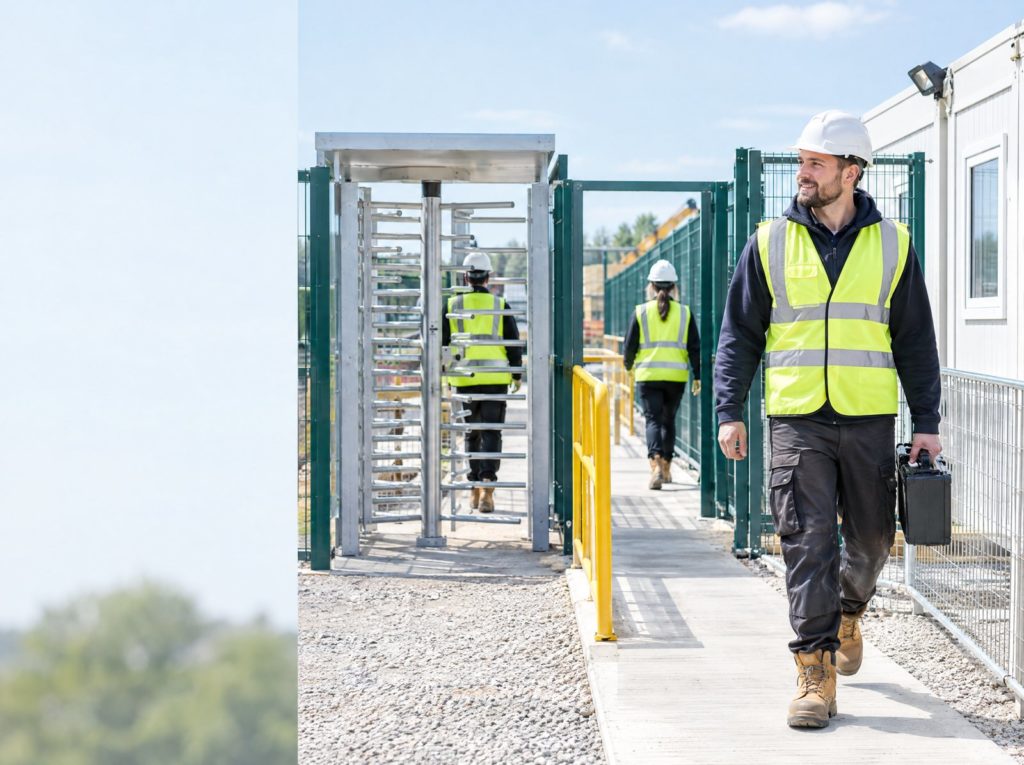
How a site is set up decides how safe it will be for the rest of the project. CDM 2015 requires welfare facilities from the start, the site to be secured against unauthorised access, and the work to be planned around safe access, storage and traffic routes.
Welfare: the minimum standards
Schedule 2 of CDM 2015 sets the minimum welfare facilities. They must be available from the start of the construction phase and throughout.
| Facility | What is required |
|---|---|
| Toilets | Suitable and sufficient, adequately ventilated and lit, kept clean, with separate rooms for men and women unless each is in a lockable room for one person. |
| Washing facilities | Next to toilets and changing areas, with hot and cold or warm running water, soap and a way to dry hands. Showers where the work or health needs them. |
| Drinking water | An adequate supply of wholesome drinking water, clearly marked, with cups unless it comes from a jet. |
| Changing rooms and lockers | Where special clothing is worn, with somewhere to store and dry clothing and personal belongings. |
| Rest facilities | Somewhere to rest, with tables and seats, a way to boil water and heat food, and kept at a suitable temperature. |
On smaller or short jobs, welfare can be provided in other ways, such as a mobile welfare unit or agreed use of facilities nearby, but it must still be available. Who provides it depends on the project. The principal contractor or the only contractor is responsible, and the client must make sure it is in place.
Site security and protecting the public
- Fence the site boundary to suit the location and the risks, paying particular attention to children, who see sites as playgrounds.
- Control access through gates with signing in, and keep gates closed when not in use.
- Secure plant, isolate equipment and remove ladders out of hours.
- Fence or cover excavations and openings, and keep materials stacked safely.
- Protect the public next to the site with covered walkways, fans and barriers where work is overhead.
- Display signs showing the site is a construction area and who to contact.
HSE’s guidance HSG151, Protecting the public, covers this in detail.
A site set-up checklist
- Site boundary, gates and security arrangements
- Welfare in place and serviced
- Separate pedestrian and vehicle routes, with a traffic management plan
- Delivery and storage areas, away from edges and routes
- Locations of underground and overhead services identified and marked
- Fire points, emergency routes and assembly point
- First aid arrangements and emergency contacts displayed
- Site office with the F10 notice where needed and the construction phase plan
- Induction process ready before anyone starts work
- Lighting for winter working and security
Inductions
Everyone needs a site induction before they start. It should cover the site rules, the main risks and how they are controlled, emergency arrangements, welfare and who to report to. Keep a record of who has been inducted.
Training that helps
Site set-up is a core part of SMSTS, and supervisors cover it on SSSTS. Our health and safety induction eLearning can support site inductions for new starters.
Where this fits in SMSTS and SSSTS
Site set-up, security and welfare are tested on both papers. Our free SMSTS mock test and SSSTS mock test let you check your knowledge before the course or a refresher, and you can email yourself the results sheet at the end.
When you are ready, the five day SMSTS course is for site managers and the two day SSSTS course is for supervisors. If your certificate is due, the SMSTS refresher and SSSTS refresher keep it current.
Frequently asked questions
What welfare facilities are required on a construction site?
Toilets, washing facilities with hot and cold or warm water, drinking water, changing and storage facilities where needed, and rest facilities with a way to heat food and boil water.
When must welfare be in place?
From the start of the construction phase, and throughout the project.
Who is responsible for site welfare?
The principal contractor, or the only contractor on single contractor projects. The client must make sure it is provided.
Do construction sites have to be fenced?
The site must be secured against unauthorised access. The type of fencing depends on the location and risks, with particular care where children or the public could get in.
Read the source
The Construction (Design and Management) Regulations 2015, regulations 4, 13 and 15 and Schedule 2; HSE guidance L153, Managing health and safety in construction; and HSE guidance HSG151, Protecting the public: your next move. Facts checked on 6 October 2026.
Upcoming CITB Site Safety dates
Straight from the booking system, so this block is never out of date.
Prices exclude VAT. Dates and places update automatically.