&
& 


Inspections are the main way a site checks that its controls are working before someone gets hurt. Some are required by law at set intervals. Others, such as weekly site safety walks, are good practice and the backbone of the Check stage of Plan, Do, Check, Act.
Statutory inspections at a glance
| What | When | Where it comes from |
|---|---|---|
| Scaffolds and working platforms where someone could fall 2 metres or more | Before first use, at least every 7 days, and after anything that could affect safety | Work at Height Regulations 2005. See our scaffold tags guide. |
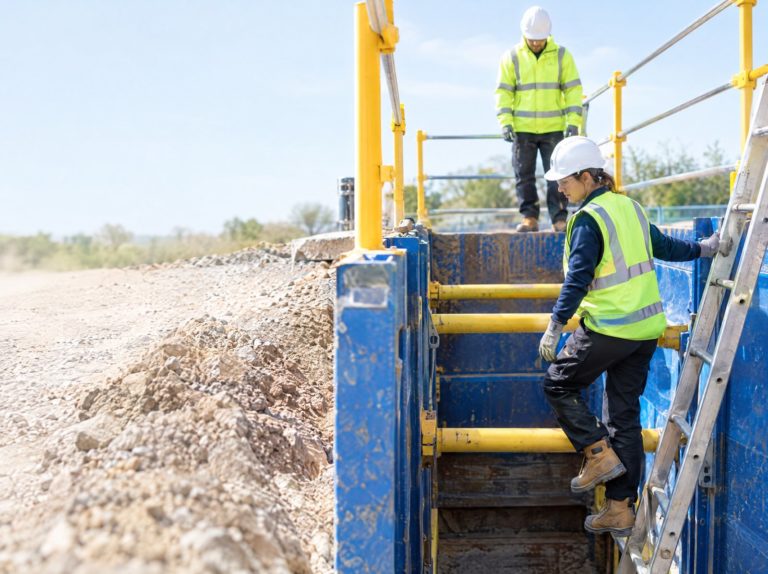
| Excavations | At the start of each shift, after events affecting stability and after any fall of material | CDM 2015 regulation 22. See our excavation safety guide. |
| Cofferdams and caissons | At the start of each shift and after events affecting stability | CDM 2015 |
| Lifting equipment | Thorough examination every 6 or 12 months, plus inspections in between | LOLER 1998. See our LOLER guide. |
| Work equipment that can deteriorate | At suitable intervals set by the risk assessment | PUWER 1998. See our PUWER guide. |
| Portable electrical equipment | Pre-use checks every time, with formal inspection and testing at intervals suited to the risk | Electricity at Work Regulations 1989 |
| Fire extinguishers and alarms | Regular checks, with servicing at intervals set by the relevant standards | Fire safety law |
Running a good site inspection
- Plan it. Use a checklist, but do not just tick boxes. Look at the work actually happening.
- Walk the whole site, including welfare, storage areas and the boundary.
- Talk to people. Ask how the job is going and what gets in the way of doing it safely.
- Look for root causes. A missing guard rail is a symptom. Why was it removed?
- Record what you find, with photographs, and rate the risk of each issue.
- Act immediately on serious risks. Stop the work if needed.
- Agree actions, with owners and dates, and close them out.
- Share the findings with the workforce, so people know what needs to change and why.
What a weekly site inspection should cover
- Access and housekeeping: walkways, stairs, storage, lighting
- Work at height: scaffolds, edge protection, openings, ladders, towers
- Excavations, supports and barriers
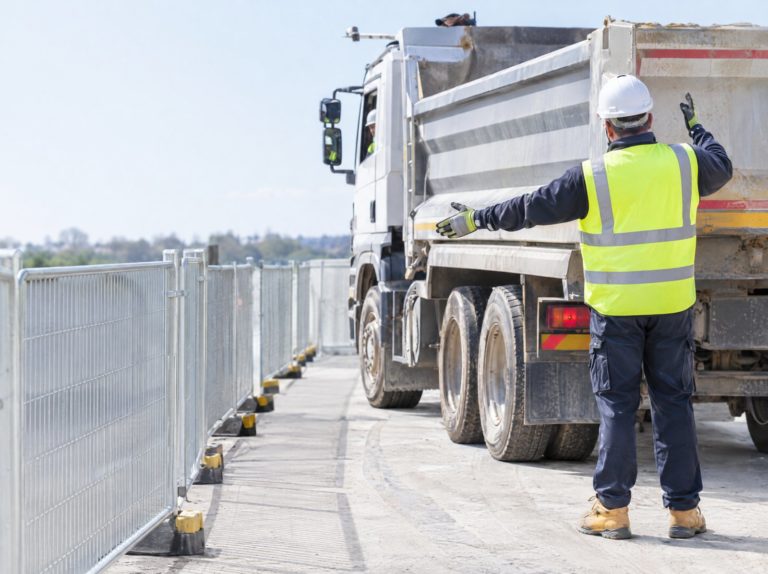
- Plant and vehicles: routes, marshals, pre-use checks
- Electrical: 110V tools, leads, distribution boards
- Hazardous substances: storage, COSHH assessments, PPE
- Fire: fire points, escape routes, hot works
- Welfare: clean, stocked and adequate
- Paperwork: RAMS, permits, inspection registers, inductions
Active and reactive monitoring
Inspections are active monitoring: they find problems before an accident. Accident investigation is reactive monitoring: it learns from things that have gone wrong. Good sites use both.
Training that helps
Inspecting and monitoring is a core skill on SMSTS and SSSTS. IOSH Managing Safely covers measuring performance for line managers.
Where this fits in SMSTS and SSSTS
Inspections, checks and monitoring, including why findings should be shared with the workforce, are tested on both papers. Our free SMSTS mock test and SSSTS mock test let you check your knowledge before the course or a refresher, and you can email yourself the results sheet at the end.
When you are ready, the five day SMSTS course is for site managers and the two day SSSTS course is for supervisors. If your certificate is due, the SMSTS refresher and SSSTS refresher keep it current.
Frequently asked questions
How often must a scaffold be inspected?
Before first use, at least every 7 days where someone could fall 2 metres or more, and after anything that could affect its safety.
How often must an excavation be inspected?
At the start of each shift, after any event likely to affect its stability and after any accidental fall of material.
Is a weekly site inspection a legal requirement?
Not as such, but the law requires employers to monitor health and safety, and regular site inspections are the most common way to do it.
Why share inspection findings with the workforce?
So people know what needs to change and why, which makes it far more likely that the changes stick.
Read the source
The Work at Height Regulations 2005, regulation 12; the Construction (Design and Management) Regulations 2015, regulations 22 to 24; the Lifting Operations and Lifting Equipment Regulations 1998, regulation 9; the Provision and Use of Work Equipment Regulations 1998, regulation 6; the Electricity at Work Regulations 1989; and HSE guidance HSG65. Facts checked on 6 October 2026.
Upcoming CITB Site Safety dates
Straight from the booking system, so this block is never out of date.
Prices exclude VAT. Dates and places update automatically.