&
& 

PUWER, the Provision and Use of Work Equipment Regulations 1998, requires work equipment to be suitable, maintained, inspected where needed, and used only by people who have been properly trained. It applies to almost every workplace in Great Britain, and on a construction site it covers everything from a hand saw to a dumper.
What counts as work equipment
Work equipment is any machinery, appliance, apparatus, tool or installation for use at work. That includes hand tools, power tools, ladders, scaffolding components, plant, vehicles used off the public road, and complete installations such as a production line. If it is provided for use at work, or workers are allowed to use their own at work, PUWER is likely to apply.
Who PUWER applies to
- Employers, for equipment provided for or used by their employees
- The self-employed, for equipment they use at work
- People who control work equipment, or control how it is used, such as a principal contractor providing shared plant or a hire company in some situations
Every regulation at a glance
| Regulation | What it requires |
|---|---|
| 4. Suitability | Equipment must be suitable for the job, the place it is used and the conditions. |
| 5. Maintenance | Equipment must be kept in efficient working order and good repair. Keep a maintenance log where there is one. |
| 6. Inspection | Equipment that can deteriorate dangerously, or whose safety depends on how it is installed, must be inspected by a competent person and the results recorded. |
| 7. Specific risks | Where equipment has a specific risk, use is restricted to designated people, and repairs to people trained for them. |
| 8. Information and instructions | Users and supervisors must have adequate information and written instructions where needed. |
| 9. Training | Users, supervisors and managers must receive adequate training on the equipment, the risks and the precautions. |
| 10. Conformity with product safety law | Equipment must meet the product safety rules that applied when it was first supplied, for example CE or UKCA marking. |
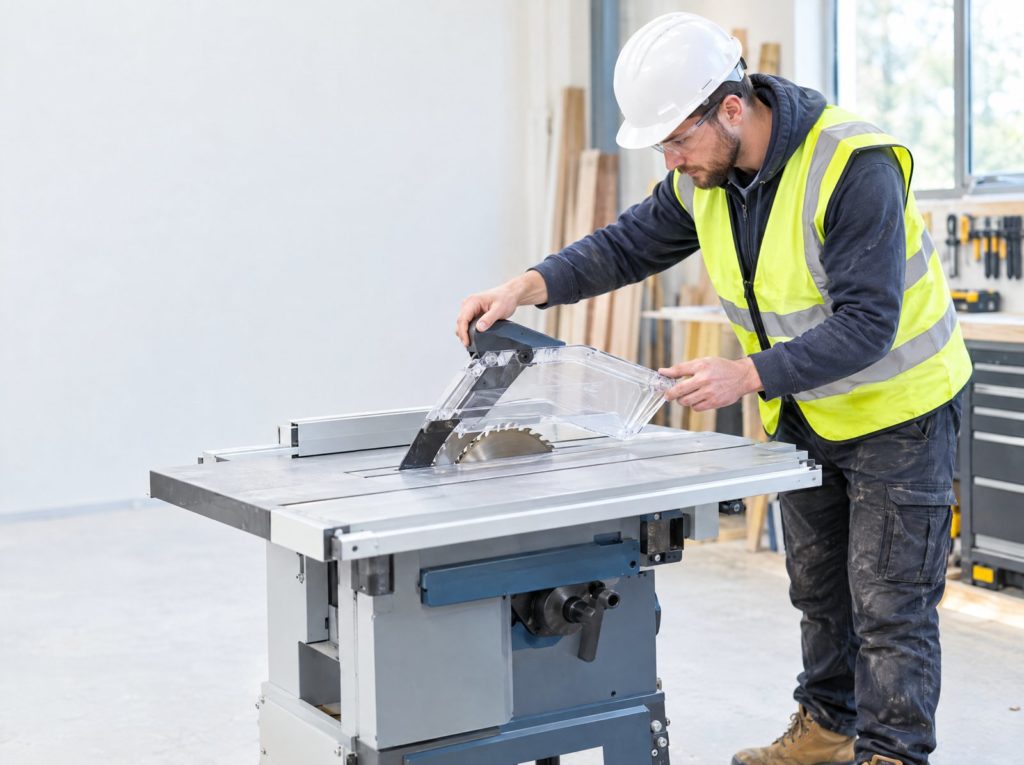
| 11. Dangerous parts of machinery | Access to dangerous moving parts must be prevented using a set hierarchy of measures. |
| 12. Specified hazards | Protect against falling or ejected articles, rupture, overheating, fire and explosion. |
| 13. High or very low temperature | Protect against burns and scalds from hot or very cold parts. |
| 14 to 18. Controls | Start controls, stop controls, emergency stops, clearly marked controls and safe control systems. |
| 19. Isolation from energy sources | Equipment must be capable of being isolated from all its energy sources. |
| 20. Stability | Equipment must be stabilised by clamping or other means where needed. |
| 21. Lighting | Suitable lighting where the equipment is used. |
| 22. Maintenance operations | Maintenance should be possible with the equipment shut down, or otherwise safely. |
| 23 and 24. Markings and warnings | Appropriate markings and warning signs or devices. |
| 25 to 30. Mobile work equipment | Carrying people safely, roll-over protection, forklift overturning, self-propelled and remote-controlled equipment, and drive shafts. |
| 31 to 35. Power presses | Extra requirements for thorough examination and inspection of power presses and their guards. |
Inspection is not the same as maintenance
| Maintenance (regulation 5) | Inspection (regulation 6) | |
|---|---|---|
| Purpose | Keep the equipment working safely | Find deterioration before it becomes dangerous |
| When | Planned intervals, manufacturer’s schedule, or when faults are found | After installation or assembly where safety depends on it, at suitable intervals, and after exceptional circumstances |
| Records | A maintenance log must be kept up to date if there is one | Results must be recorded and kept until the next inspection is recorded |
| Example on site | Replacing a worn blade or damaged lead | A competent person checking a mobile tower after it is assembled |
Equipment that leaves your business, or arrives from another, must come with physical evidence that its last inspection was carried out, such as a tag or a record.
Guarding dangerous parts: the regulation 11 hierarchy
- Fixed guards, enclosing the dangerous parts, where practicable
- Other guards or protection devices, such as interlocked guards or light curtains
- Protection appliances, such as jigs, holders and push sticks
- Information, instruction, training and supervision
You only move down the list when the measure above is not practicable. This mirrors the wider hierarchy of controls.
PUWER and LOLER
Lifting equipment is also work equipment, so PUWER applies to it. The Lifting Operations and Lifting Equipment Regulations 1998 add extra rules on top, including planning lifting operations and thorough examination by a competent person, typically every 6 months for equipment used to lift people and lifting accessories, and every 12 months for other lifting equipment, or in line with a written scheme of examination. An excavator used as a crane must meet both sets of rules.
PUWER on a construction site
| Equipment | What PUWER looks like in practice |
|---|---|
| Cut-off saw | Right blade for the material, guard set correctly, trained user, water suppression or extraction for dust. |
| Mobile tower | Erected by a trained person, inspected after assembly and before use, records kept. |
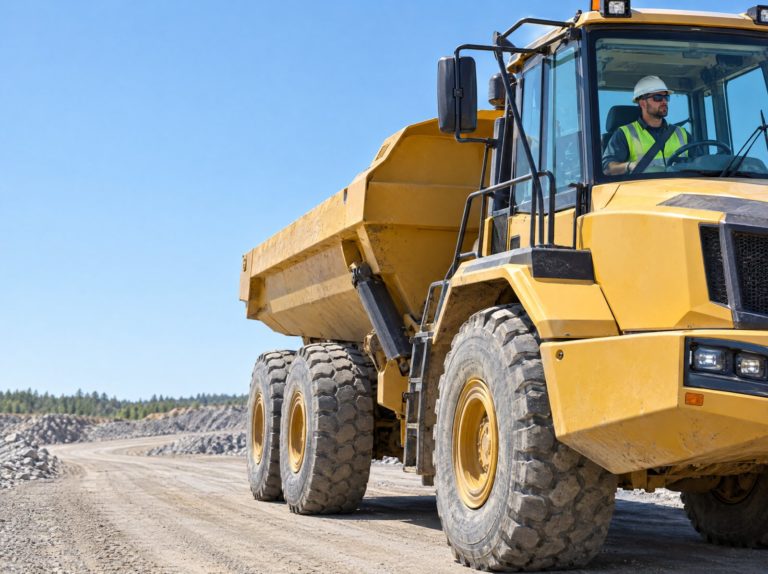
| Dumper | Roll-over protection and seat belt used, trained driver, daily checks, no passengers unless designed for them. |
| Hand-held power tools | Pre use checks, 110V on site, PAT or equivalent checks, vibration data considered. |
| Hired plant | Evidence of last inspection received from the hire company, handover checks done. |
Common failures
- Guards removed or defeated to speed up work
- No record of inspections that the equipment clearly needs
- Untrained people using specialist equipment
- Damaged leads and plugs left in use
- Pre use checks not done, or done but not recorded on shared plant
The ACoP and official guidance
| Publication | Status | What it covers |
|---|---|---|
| L22 Safe use of work equipment (4th edition, 2014) | ACoP and guidance | The general duties for all work equipment: suitability, maintenance, inspection, training, guarding and controls. |
| L112 Safe use of power presses (2nd edition, 2014) | ACoP and guidance | Extra requirements for power presses, including thorough examination and setting. |
| L114 Safe use of woodworking machinery (2nd edition, 2014) | ACoP and guidance | Extra requirements for woodworking machines, including training. |
| L117 Rider-operated lift trucks: operator training and safe use (2013) | ACoP and guidance | Forklift operator training, authorisation and safe use. |
An Approved Code of Practice (ACoP) has special legal status under section 16 of the Health and Safety at Work Act. If you are prosecuted and did not follow it, you must show that you met the law in some other way that was just as good. Guidance on Regulations has no special legal status, but inspectors refer to it and following it is normally enough to comply. Our guide to UK health and safety legislation lists every law and its ACoP or guidance in one place.
Training that helps
Our PUWER eLearning course covers the regulations for users and supervisors, and our introduction to LOLER eLearning covers the lifting side. For managers, work equipment is part of the NEBOSH National General Certificate and the NEBOSH Health and Safety Management for Construction certificate. For plant operators, see our NPORS courses.
Where this fits in SMSTS and SSSTS
Work equipment, plant and the controls that keep people safe around them come up throughout both courses. Our free SMSTS mock test and SSSTS mock test let you check your knowledge before the course or a refresher, and you can email yourself the results sheet at the end.
When you are ready, the five day SMSTS course is for site managers and the two day SSSTS course is for supervisors. If your certificate is due, the SMSTS refresher and SSSTS refresher keep it current.
Frequently asked questions
What does PUWER stand for?
The Provision and Use of Work Equipment Regulations 1998.
Does PUWER apply to my own tools?
Yes. If workers use their own tools at work, the employer still has duties to make sure they are suitable and safe.
How often does PUWER require inspections?
PUWER does not set fixed intervals. Inspection frequency depends on the equipment, how it is used and how quickly it can deteriorate. Some other rules set specific intervals, such as LOLER for lifting equipment.
Is PUWER the same as LOLER?
No. PUWER covers all work equipment. LOLER adds extra requirements for lifting equipment and lifting operations.
Read the source
The Provision and Use of Work Equipment Regulations 1998 (SI 1998/2306) and HSE’s Approved Code of Practice and guidance L22, Safe use of work equipment; HSE guidance on inspecting work equipment and on the Lifting Operations and Lifting Equipment Regulations 1998. Facts checked on 6 October 2026.
Find a date that works
Every course, every centre, with live availability and prices.
On your site or ours, and group rates on request.