&
& 

Electricity causes deaths and serious burns on construction sites every year, from tools and leads, overhead power lines, buried cables and work on electrical systems. The Electricity at Work Regulations 1989 require electrical systems and equipment to be safe, and work on or near them to be carried out safely by competent people.
Why sites use 110V
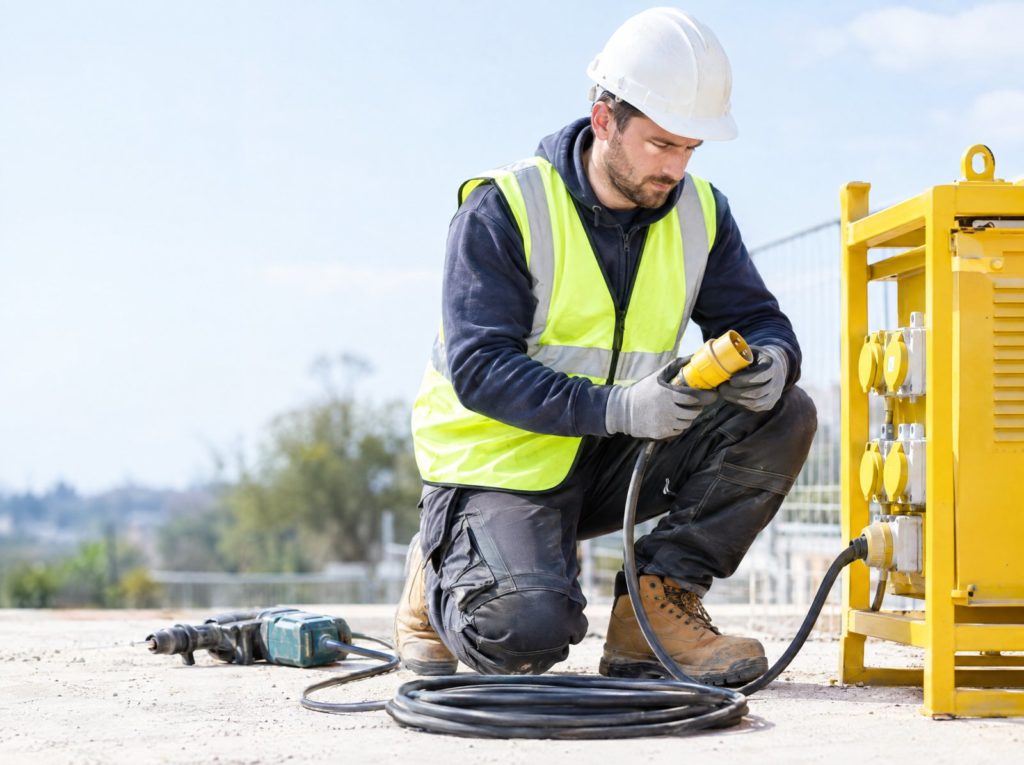
Most portable tools on UK sites run at 110V from a centre-tapped-to-earth transformer. This means the maximum voltage to earth is around 55V, which greatly reduces the risk of a fatal shock if a lead or tool is damaged. Battery tools reduce the risk further and remove trailing leads.
| Colour of plugs and sockets | Voltage | Typical use |
|---|---|---|
| Yellow | 110V | Portable tools and site lighting |
| Blue | 230V | Site cabins and equipment that cannot run at 110V, protected by an RCD |
| Red | 400V | Larger plant such as hoists and cranes |
Portable tools and leads
- Check tools, plugs and leads before every use for damage, scorch marks and exposed wires
- Take damaged equipment out of use and label it
- Run leads overhead or protect them where they cross routes
- Use RCDs, tested regularly, on any 230V supply
- Arrange formal inspection and testing at intervals that reflect the harsh site environment
Overhead power lines
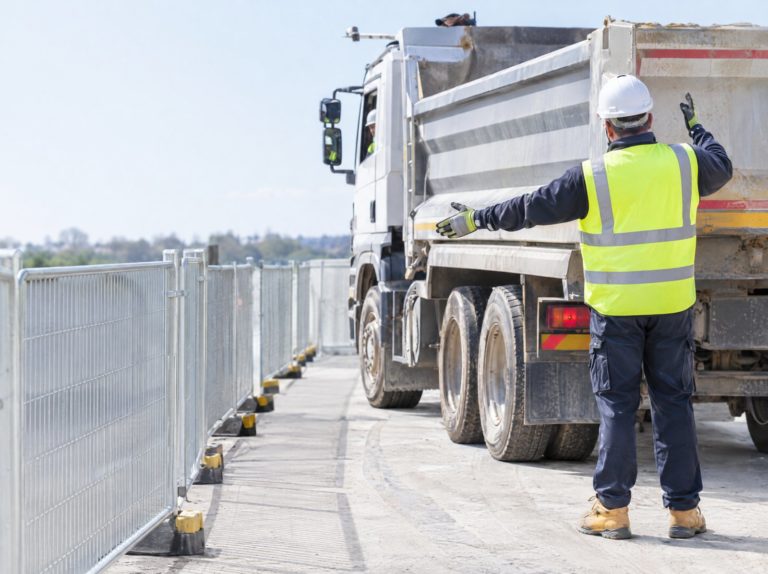
Plant such as excavators, cranes, tipper lorries and concrete pumps touching overhead lines can kill the operator and anyone nearby. HSE guidance GS6 says to consider diverting or isolating the line first. Where that is not possible, use barriers, goalposts at crossing points and exclusion zones, and plan routes and lifts to stay clear.
Buried cables
Striking an underground cable can cause severe burns. Plan, locate and mark services, and dig carefully near them, following HSG47. Our HSG47 guide covers the full method.
Isolation and live work
- Work on electrical systems should be done dead wherever possible, with the system isolated, locked off and proved dead before work starts.
- Live work is only allowed when it is unreasonable for the system to be dead, it is reasonable to work live, and suitable precautions are taken to prevent injury.
- Only competent people should work on electrical systems, and isolations should be controlled through a safe system of work, often with a permit to work.
Temporary site installations
Site distribution systems should be designed, installed and inspected by competent electricians, protected from damage and the weather, and inspected regularly. The relevant British Standards set out good practice for temporary electrical systems on construction sites.
Training that helps
Our electrical safety eLearning covers the risks and controls for workers and supervisors, and our CAT and Genny cable avoidance training covers finding buried cables before digging.
Where this fits in SMSTS and SSSTS
110V colour codes, overhead lines and electrical safety on site are tested on both papers. Our free SMSTS mock test and SSSTS mock test let you check your knowledge before the course or a refresher, and you can email yourself the results sheet at the end.
When you are ready, the five day SMSTS course is for site managers and the two day SSSTS course is for supervisors. If your certificate is due, the SMSTS refresher and SSSTS refresher keep it current.
Frequently asked questions
Why do construction sites use 110V?
Because a 110V centre-tapped-to-earth supply limits the voltage to earth to around 55V, greatly reducing the risk of a fatal shock from damaged tools or leads.
What colour are 110V plugs?
Yellow. 230V plugs are blue and 400V plugs are red.
When is live electrical work allowed?
Only when it is unreasonable for the equipment to be dead, it is reasonable to work live, and suitable precautions are taken to prevent injury.
What should you do if plant touches an overhead line?
Stay in the cab if it is safe to do so, warn others to keep away, and call the line owner. If you must leave, jump clear without touching the machine and the ground at the same time.
Read the source
The Electricity at Work Regulations 1989, regulations 4, 12, 13, 14 and 16; HSE guidance HSR25, Memorandum of guidance on the Electricity at Work Regulations 1989; HSE guidance GS6, Avoiding danger from overhead power lines; HSE guidance HSG47; and HSE guidance on electrical safety in construction. Facts checked on 6 October 2026.
Upcoming CITB Site Safety dates
Straight from the booking system, so this block is never out of date.
Prices exclude VAT. Dates and places update automatically.