&
& 

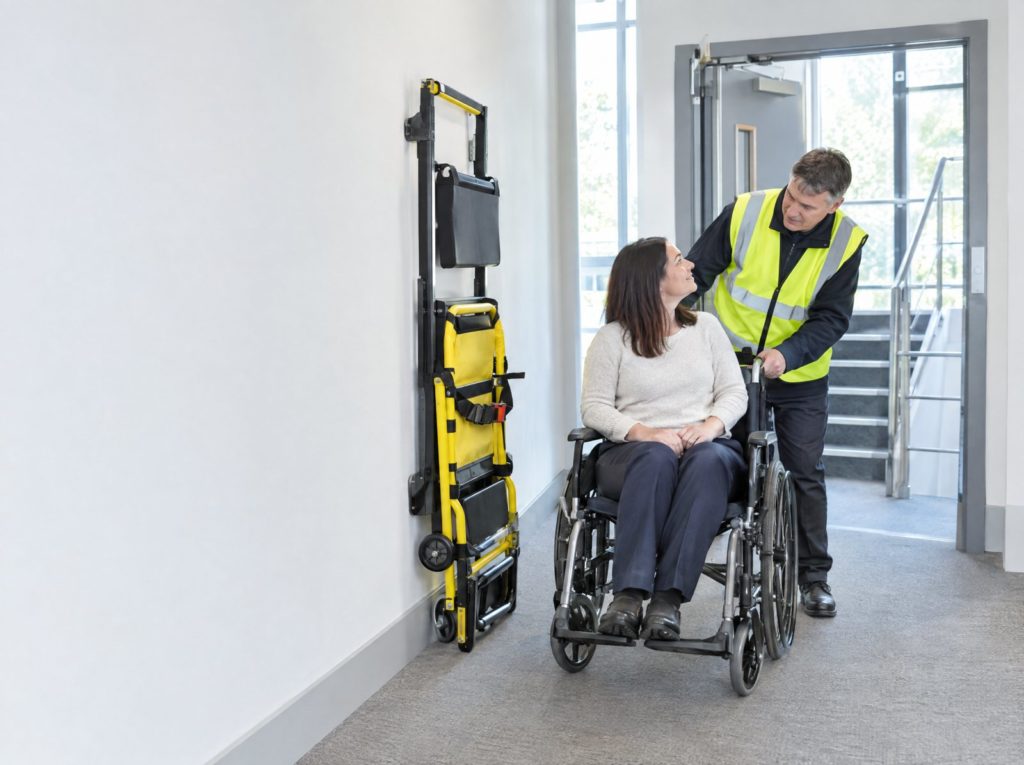
A personal emergency evacuation plan, or PEEP, is a written plan for someone who may need help to get out of a building safely in an emergency. That might be because of a disability, an injury, pregnancy, a medical condition, or simply because they cannot hear an alarm or manage stairs.
Who needs a PEEP?
- Wheelchair users and people with mobility impairments, whether permanent or temporary
- People with sight or hearing impairments who may not see or hear the alarm
- People with cognitive impairments or conditions that affect how they respond in an emergency
- Some people who are pregnant, or recovering from injury or surgery
- Anyone who tells you they would need help to evacuate
A PEEP should be offered, not imposed. Talk to the person, understand what they need and agree the plan with them.
The law at work
In England and Wales, the Regulatory Reform (Fire Safety) Order 2005 requires the responsible person to have emergency arrangements that allow everyone to get out safely, and not to rely on the fire and rescue service to evacuate people. For anyone who needs help, a PEEP is the usual way to show that has been planned. Equality law also expects reasonable adjustments for disabled people, including in emergency procedures. Our guide to the Fire Safety Order explains the wider duties.
What a PEEP should include
- The person’s name, location in the building and working hours or patterns
- How they will be alerted, for example a vibrating pager or a colleague, if they may not hear the alarm
- The escape route and any refuge area they will use
- Who will help them, with named people and back-ups for absence
- Any equipment needed, such as an evacuation chair, and confirmation that helpers are trained to use it
- How the person will communicate with helpers and the fire service
- When the plan will be practised and reviewed
Refuges and evacuation chairs
A refuge is a protected area, usually in a stairway enclosure, where someone can wait briefly in relative safety. It is part of the escape route, not the end of it: the plan must say how the person will be taken from the refuge to a place of safety, and by whom. Evacuation chairs allow trained staff to move someone down stairs safely, but only if they are trained and practised in using them.
Generic and standard PEEPs
Buildings with visitors, such as shops, offices and venues, cannot write a PEEP for every visitor in advance. Many use a standard or generic evacuation plan setting out the help available to visitors, and reception teams ask visitors whether they would need assistance.
New residential PEEP rules in England from April 2026
The Fire Safety (Residential Evacuation Plans) (England) Regulations 2025 came into force on 6 April 2026. They apply to residential buildings at least 18 metres high or with at least seven storeys, and to buildings over 11 metres that have a simultaneous evacuation strategy.
- The responsible person must take reasonable steps to identify residents whose ability to evacuate is affected by a cognitive or physical impairment.
- Those residents must be offered a person-centred fire risk assessment and, where appropriate, an emergency evacuation information statement.
- With the resident’s consent, basic information is shared with the fire and rescue service.
- Plans must be reviewed regularly, generally every 12 months.
- Taking part is voluntary for residents.
Testing and reviewing PEEPs
- Include people with PEEPs in fire drills, with their agreement
- Check helpers are still in post and trained
- Review the plan after changes to the building, the person’s needs or the team
- Review it after any drill or incident that shows a problem
Training that helps
Our evacuation chair training prepares staff to move people safely down stairs, and our fire warden and marshal training covers evacuation roles. For managers and fire safety leads, the NEBOSH Certificate in Fire Safety covers emergency planning and fire risk assessment in depth, and our fire safety eLearning is a quick introduction for all staff.
Frequently asked questions
What is a PEEP?
A personal emergency evacuation plan: a written plan for someone who may need help to get out of a building safely in an emergency.
Are PEEPs a legal requirement?
At work, the Fire Safety Order requires emergency arrangements that allow everyone to evacuate safely, and a PEEP is the usual way to meet that for people who need help. In high-rise and some other residential buildings in England, specific residential PEEP rules apply from 6 April 2026.
Who is responsible for a PEEP?
The responsible person for the premises, usually the employer or the person in control of the building, working with the person who needs the plan.
Can you rely on the fire service to evacuate people?
No. The responsible person must plan to get everyone out without relying on the fire and rescue service.
Read the source
The Regulatory Reform (Fire Safety) Order 2005, articles 8, 14 and 15; the Fire Safety (Residential Evacuation Plans) (England) Regulations 2025; the Equality Act 2010; and published legal guidance on the residential PEEP regulations. Facts checked on 6 October 2026.
Find a date that works
Every course, every centre, with live availability and prices.
On your site or ours, and group rates on request.