&
& 

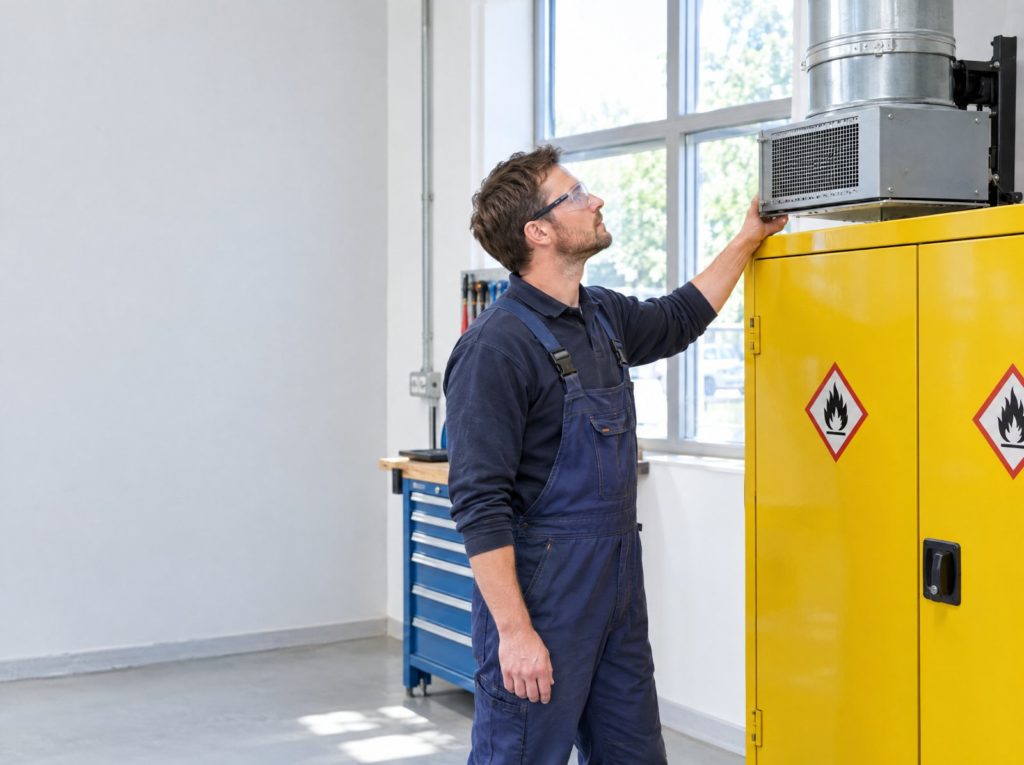
DSEAR, the Dangerous Substances and Explosive Atmospheres Regulations 2002, requires employers to control the risks of fire, explosion and similar events from dangerous substances at work. It applies in almost any workplace that stores or uses flammable liquids, gases, dusts or other dangerous substances.
What counts as a dangerous substance?
- Flammable liquids, such as petrol, solvents, paints and thinners
- Flammable gases, such as LPG, propane and hydrogen
- Combustible dusts, such as wood, flour, sugar and some metal dusts
- Oxidising and explosive substances
- Substances corrosive to metals and gases under pressure, which were added to DSEAR in 2015
What DSEAR requires
| Duty | What it means |
|---|---|
| Risk assessment | Assess the fire and explosion risks from dangerous substances before work starts. |
| Eliminate or reduce | Remove the substance where possible, or replace it with a safer one, and keep quantities to a minimum. |
| Control and mitigate | Prevent releases, prevent ignition and reduce the harm if something goes wrong. |
| Classify hazardous areas | Identify zones where explosive atmospheres may occur, and use suitable equipment in them. |
| Emergency arrangements | Plan for accidents, incidents and emergencies. |
| Information and training | Make sure employees understand the risks and the precautions. |
Hazardous area zones
| Zone | Gases and vapours | Zone | Dusts | Likelihood of an explosive atmosphere |
|---|---|---|---|---|
| Zone 0 | Present continuously or for long periods | Zone 20 | Present continuously or for long periods | Highest |
| Zone 1 | Likely in normal operation occasionally | Zone 21 | Likely in normal operation occasionally | Medium |
| Zone 2 | Not likely in normal operation, and only for a short time if it does occur | Zone 22 | Not likely in normal operation, and only for a short time | Lowest |
Equipment used in hazardous zones must be suitable for the zone, usually shown by ATEX and Ex markings, and entry points to zones should be marked with the yellow triangular EX sign where needed.
Typical controls
- Store flammable liquids in suitable cabinets and stores, away from ignition sources
- Good ventilation, including local exhaust ventilation for vapours and dust
- Control ignition sources: hot work permits, no smoking, suitable electrical equipment, anti-static measures
- Good housekeeping to stop dust building up
- Keep only the quantities needed for the day in the workplace
- Clear procedures for spills, with spill kits to hand
DSEAR links closely to COSHH, which covers the health effects of the same substances, and to hazard symbols, which show the flammable and oxidising hazards on labels.
The ACoP and official guidance
| Publication | Status | What it covers |
|---|---|---|
| L138 Dangerous substances and explosive atmospheres (2nd edition, 2013) | ACoP and guidance | Risk assessment, hazardous area classification, equipment selection, emergency arrangements and the 2015 extension to gases under pressure and substances corrosive to metals. |
An Approved Code of Practice (ACoP) has special legal status under section 16 of the Health and Safety at Work Act. If you are prosecuted and did not follow it, you must show that you met the law in some other way that was just as good. Guidance on Regulations has no special legal status, but inspectors refer to it and following it is normally enough to comply. Our guide to UK health and safety legislation lists every law and its ACoP or guidance in one place.
Training that helps
Our DSEAR eLearning covers the regulations, zones and controls for workers and supervisors. For managers, dangerous substances and fire risks are covered in the NEBOSH National General Certificate and the NEBOSH Certificate in Fire Safety.
Frequently asked questions
What does DSEAR stand for?
The Dangerous Substances and Explosive Atmospheres Regulations 2002.
Do I need a DSEAR risk assessment?
Yes, if dangerous substances are present or could be present at your workplace. In many workplaces it can be part of the fire risk assessment.
What is a Zone 1 area?
A place where an explosive atmosphere of gas or vapour is likely to occur occasionally in normal operation.
What is the difference between DSEAR and COSHH?
DSEAR covers fire and explosion risks from dangerous substances. COSHH covers the health risks of hazardous substances.
Read the source
The Dangerous Substances and Explosive Atmospheres Regulations 2002, as amended in 2015; HSE Approved Code of Practice and guidance L138, Dangerous substances and explosive atmospheres; and HSE guidance on DSEAR and hazardous area classification. Facts checked on 6 October 2026.
Find a date that works
Every course, every centre, with live availability and prices.
On your site or ours, and group rates on request.