&
& 

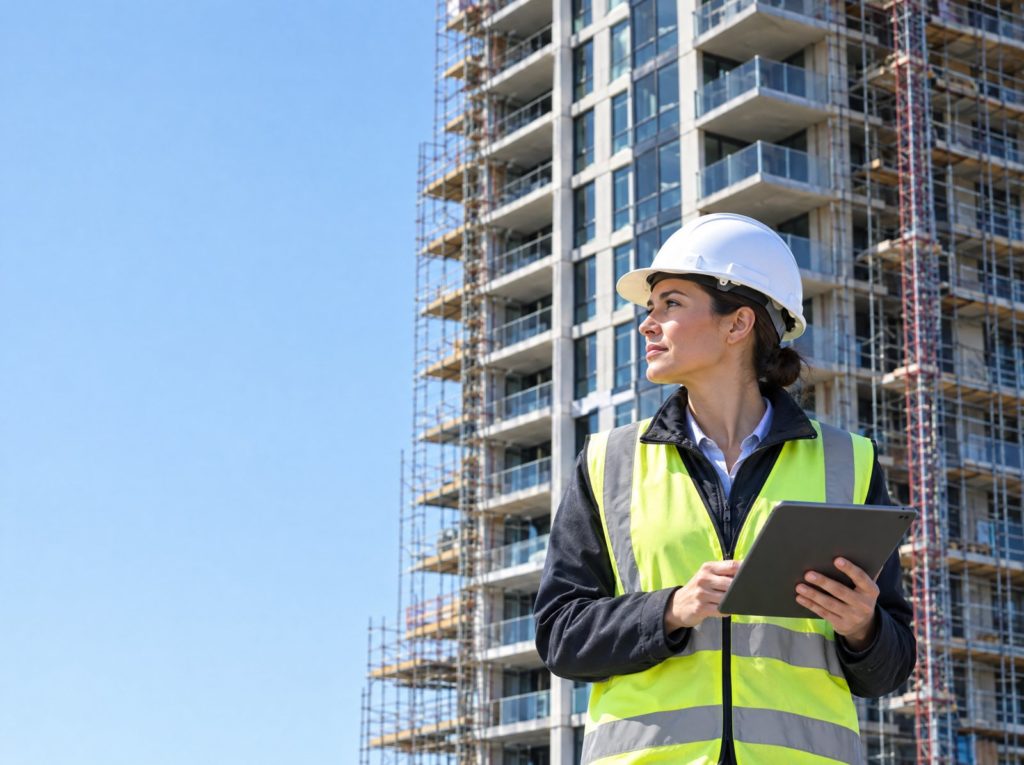
The Building Safety Act 2022 is the biggest change to building safety law in decades, brought in after the Grenfell Tower fire. It covers how buildings are designed and built, how higher-risk buildings are managed once occupied, and who is accountable for safety at each stage.
Higher-risk buildings
Many of the strictest rules apply to higher-risk buildings: buildings at least 18 metres high or with at least 7 storeys, containing at least two residential units. During design and construction, hospitals and care homes of that height are also covered.
The Building Safety Regulator
The Act created the Building Safety Regulator to oversee the safety and standards of all buildings, lead the regulation of higher-risk buildings, and oversee the building control profession. It was set up within HSE, and became a standalone body sponsored by the Ministry of Housing, Communities and Local Government on 27 January 2026.
The gateways for higher-risk buildings
| Gateway | When | What happens |
|---|---|---|
| Gateway 1 | Planning | Fire safety is considered at the planning application stage. |
| Gateway 2 | Before construction starts | The Building Safety Regulator must approve the building control application. Work cannot start until it does. |
| Gateway 3 | Completion | The Regulator must issue a completion certificate before the building can be occupied. |
New dutyholder roles under the Building Regulations
For all building work, the Building Regulations now include dutyholder and competence requirements, with a principal designer and principal contractor for Building Regulations compliance. These mirror the roles in CDM 2015, and the same organisations often hold both, but the duties are different: CDM is about health and safety during the work, while these roles are about the finished building meeting the Building Regulations.
Accountable persons for occupied buildings
- The principal accountable person had to register existing higher-risk buildings with the Regulator by 1 October 2023
- Accountable persons must assess and manage building safety risks, mainly fire spread and structural failure
- They must keep a safety case and prepare a safety case report
- They must report certain fire and structural safety occurrences to the Regulator
- They must run a resident engagement strategy and deal with complaints
- They must pass building safety information to any new accountable person
The golden thread
For higher-risk buildings, the golden thread is the accurate, up to date digital information about the building that is needed to understand it and keep it safe, from design through to occupation. The Act also amended the Fire Safety Order, as explained in our guide to the Fire Safety Act and 2022 Regulations.
The ACoP and official guidance
| Publication | Status | What it covers |
|---|---|---|
| No ACoP | n/a | There is no ACoP. The Building Safety Regulator and government publish guidance on higher-risk buildings, the gateways, accountable persons, safety cases, mandatory occurrence reporting and dutyholder competence. |
An Approved Code of Practice (ACoP) has special legal status under section 16 of the Health and Safety at Work Act. If you are prosecuted and did not follow it, you must show that you met the law in some other way that was just as good. Guidance on Regulations has no special legal status, but inspectors refer to it and following it is normally enough to comply. Our guide to UK health and safety legislation lists every law and its ACoP or guidance in one place.
Training that helps
For experienced fire safety practitioners who already hold a Level 4 fire qualification or work at a senior level, the Level 6 NVQ in Fire Safety Design and Building Risk Management aligns closely with the competence the Act expects. The NEBOSH Certificate in Fire Safety covers fire risk management, and SMSTS and the NEBOSH construction certificate cover safety on construction projects.
Frequently asked questions
What is a higher-risk building?
A building at least 18 metres high or with at least 7 storeys, with at least two residential units. Hospitals and care homes of that height are also covered during design and construction.
Who is the Building Safety Regulator?
The body set up by the Act to regulate building safety. It moved out of HSE to become a standalone body on 27 January 2026.
What is the golden thread?
The accurate, up to date digital information about a higher-risk building needed to keep it safe throughout its life.
Does the Building Safety Act replace CDM?
No. CDM 2015 still covers health and safety during construction. The Act adds separate duties about the building meeting the Building Regulations and being safe once occupied.
Read the source
The Building Safety Act 2022 and the Higher-Risk Buildings (Descriptions and Supplementary Provisions) Regulations 2023; the Building Regulations etc. (Amendment) (England) Regulations 2023; government guidance on accountable persons; and the Building Safety Regulator strategic plan 2026 to 2027. Facts checked on 7 October 2026.
Find a date that works
Every course, every centre, with live availability and prices.
On your site or ours, and group rates on request.