&
& 

Mobile plant is involved in many of the most serious accidents on construction sites. Workers are struck or crushed, operators are killed when machines overturn, and loads fall from poorly attached buckets. PUWER, LOLER and CDM 2015 all apply, and most incidents come down to planning, competence and keeping people apart from machines.
The main risks
| Risk | Typical causes |
|---|---|
| Overturning | Slopes, uneven ground, edges of excavations, overloading or uneven loading, speed |
| People struck or crushed | Working near plant, poor visibility, reversing, slewing excavators |
| Falling loads | Unsecured loads, unsuitable attachments, quick hitch failure |
| Contact with services | Overhead power lines and buried cables |
| Operator injuries | Getting on and off, being thrown out, unauthorised use |
Dumpers
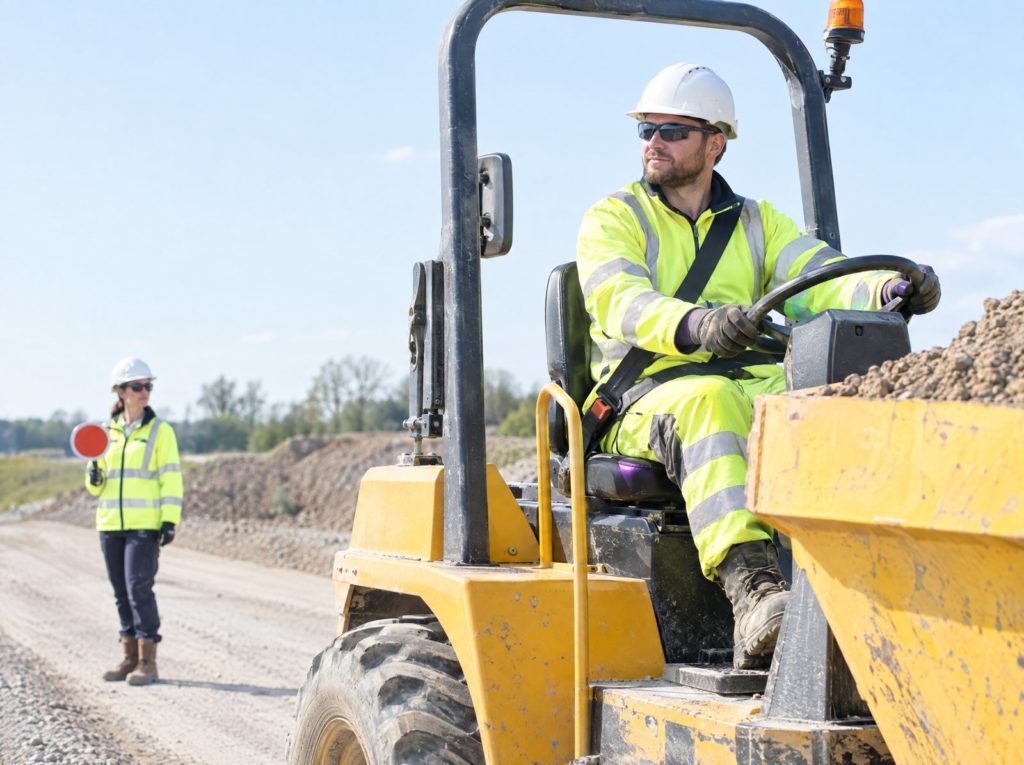
- Roll-over protection and seat belts fitted, and the seat belt always worn
- Loads within capacity and evenly distributed, so the driver can see ahead
- Stop blocks at tipping points near excavations
- No passengers unless the machine is designed for them
- Keys removed when not in use
Overturning dumpers have been one of the most common causes of plant deaths, which is why roll-over protection and seat belts matter so much.
Excavators
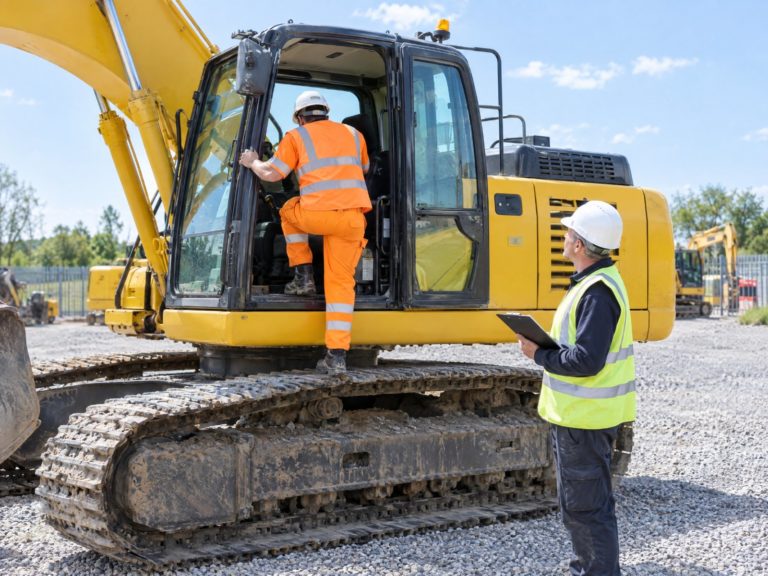
- Exclusion zones around the slew radius, so nobody can be struck by the counterweight or bucket
- Quick hitches that lock the bucket automatically, with the operator checking the bucket is secure each time it is changed
- If used to lift, the machine must be suitable, marked with its rated capacity and examined under LOLER
- Visibility aids such as cameras and mirrors, and a plant marshal where people must work nearby
Telehandlers
- Use the right attachment for the job, and check the load chart for each attachment
- Work on firm, level ground and within the rated capacity at the reach being used
- Never use the forks or bucket to lift people. Use a properly designed work platform where allowed.
- Travel with the load low and the boom retracted
Before use, every time
- Operator trained, competent and authorised for this machine
- Pre-use checks completed and recorded, including brakes, steering, lights, alarms and attachments
- Route and work area checked for slopes, edges, services and people
- Exclusion zones set up and marshals in place where needed
- Seat belt worn
Competence
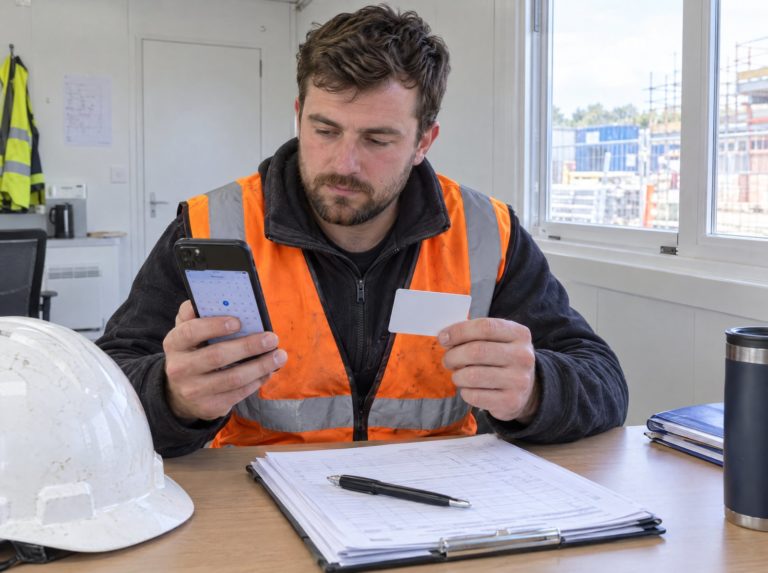
Operators must be trained and competent for the specific type of machine, and most sites require a recognised card such as an NPORS or CPCS card. Familiarisation on the particular model is still needed.
Training that helps
We run NPORS training for common plant, including the forward tipping dumper, forward tipping mini dumper, 180 excavator and telescopic handler, and the plant and machinery marshal course. Our guide to construction traffic management covers keeping people and plant apart.
Where this fits in SMSTS and SSSTS
Mobile plant, dumpers and causes of overturning are tested on both papers. Our free SMSTS mock test and SSSTS mock test let you check your knowledge before the course or a refresher, and you can email yourself the results sheet at the end.
When you are ready, the five day SMSTS course is for site managers and the two day SSSTS course is for supervisors. If your certificate is due, the SMSTS refresher and SSSTS refresher keep it current.
Frequently asked questions
What is the most common cause of dumper accidents?
Overturning, often on slopes, near excavation edges or when overloaded. Roll-over protection and seat belts are essential.
Do dumper drivers have to wear a seat belt?
Yes, where the dumper has roll-over protection and a seat belt fitted, the belt must be worn.
Can an excavator be used to lift loads?
Yes, if it is suitable for lifting, marked with its rated capacity, examined under LOLER, and the lift is planned and carried out by trained people.
Do plant operators need a card?
The law requires operators to be competent. Most sites require a recognised card, such as NPORS or CPCS, as evidence.
Read the source
The Provision and Use of Work Equipment Regulations 1998, Part III; the Lifting Operations and Lifting Equipment Regulations 1998; the Construction (Design and Management) Regulations 2015, regulations 27 and 28; and HSE guidance on construction plant, dumpers and quick hitches. Facts checked on 6 October 2026.
Build your NPORS course
Tell it who is coming and it works out the days, the ratio and how many times it has to run.
Your site or ours. Quoted per group, not per head.