&
& 

Excavations can collapse suddenly and without warning, even in ground that looks firm. A cubic metre of soil can weigh more than a tonne, so even a shallow collapse can crush or bury someone. CDM 2015 regulation 22 sets out what must be done to keep excavations safe.
The main hazards
- Collapse of the sides, burying or crushing workers
- People, vehicles or materials falling in
- Striking underground services
- Undermining nearby structures, scaffolds or roads
- Flooding and water ingress
- Build-up of gas or lack of oxygen, which can make an excavation a confined space
Preventing collapse
| Method | How it works |
|---|---|
| Battering | Sloping the sides back to a safe angle, which depends on the soil type |
| Benching or stepping | Cutting the sides into steps |
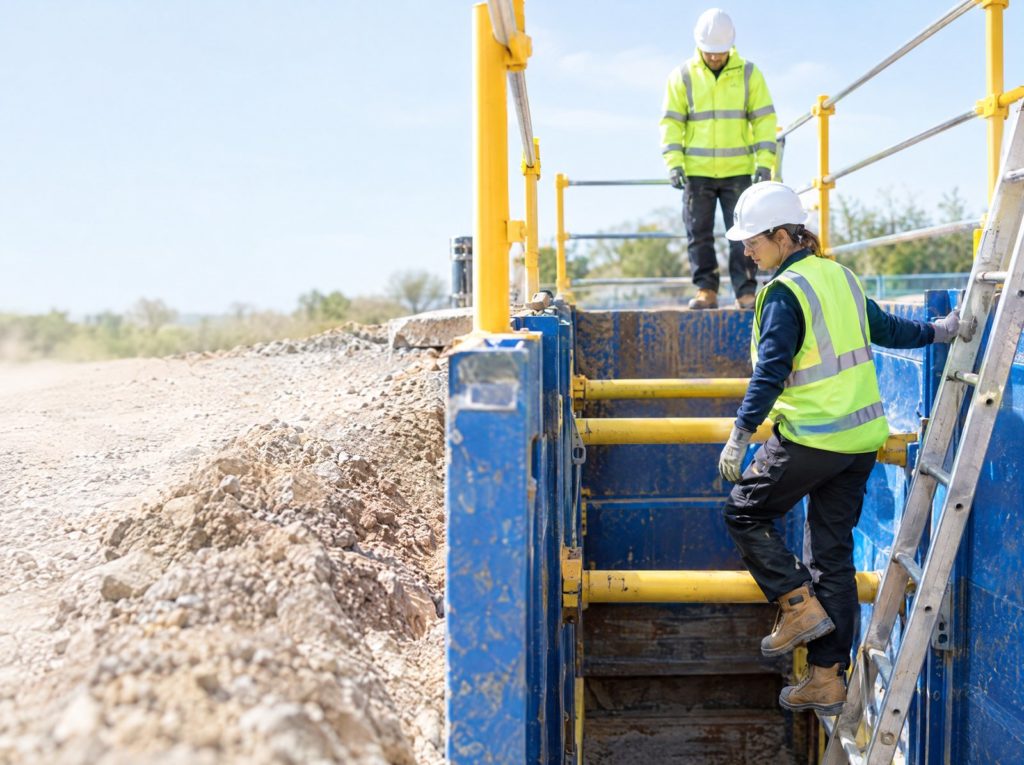
| Trench boxes and drag boxes | Prefabricated steel supports placed in the trench |
| Hydraulic or timber shoring | Supports and walings installed against the sides |
| Sheet piling | Steel sheets driven in to support deeper or wetter ground |
Support systems are temporary works and need designing and checking. Nobody should enter an unsupported excavation where there is a risk of collapse, even for a moment.
Edges, access and plant
- Fit edge protection or barriers where people could fall in
- Provide safe access and egress, such as a secured ladder
- Keep spoil heaps, materials and plant back from the edge
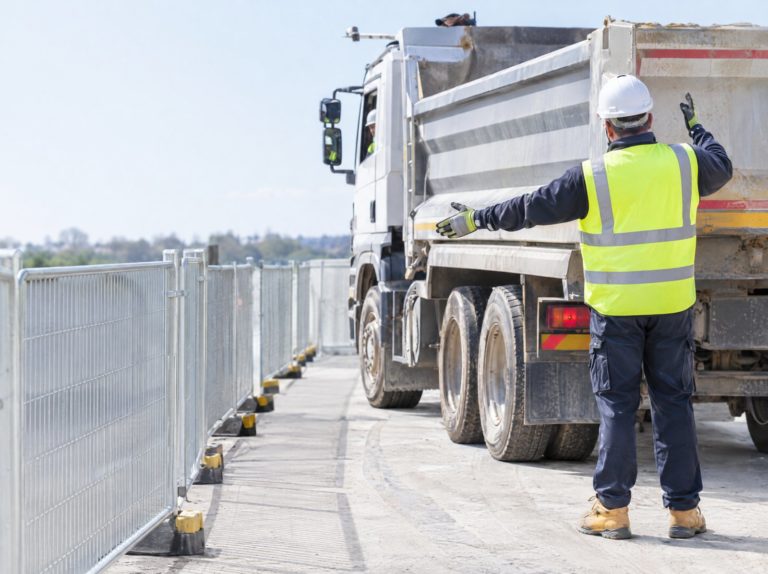
- Use stop blocks to stop vehicles tipping into the excavation
- Make sure nearby structures and roads are not undermined, and support them if needed
- Light and fence excavations left open near public areas
Inspections and reports
CDM 2015 requires a competent person to inspect excavations:
- At the start of each shift in which work is carried out
- After any event likely to affect the strength or stability of the excavation, such as heavy rain or vibration
- After any accidental fall of rock, earth or other material
If the inspector is not satisfied that work can be carried out safely, work must stop until the problem is fixed. Inspections must be recorded in a written report, which is kept on site and then at an office for three months after the work is completed.
Buried services
Locate, mark and hand dig near services before any mechanical excavation, following HSG47. Our HSG47 guide explains the method in full.
Training that helps
Our CAT and Genny cable avoidance training covers locating services before digging, and NPORS excavation marshal and banksperson training covers guiding plant safely near excavations. Plant operators can train on the NPORS 180 excavator course.
Where this fits in SMSTS and SSSTS
Excavation supports, inspections and keeping plant back from the edge are tested on both papers. Our free SMSTS mock test and SSSTS mock test let you check your knowledge before the course or a refresher, and you can email yourself the results sheet at the end.
When you are ready, the five day SMSTS course is for site managers and the two day SSSTS course is for supervisors. If your certificate is due, the SMSTS refresher and SSSTS refresher keep it current.
Frequently asked questions
How often must an excavation be inspected?
At the start of every shift in which work is carried out, after any event likely to affect its stability, and after any accidental fall of material.
At what depth does a trench need support?
There is no safe depth in law. Any excavation where there is a risk of collapse that could injure someone needs to be battered back or supported.
Who can inspect an excavation?
A competent person with the knowledge and experience to recognise the risks and judge whether work can continue safely.
How long must excavation inspection reports be kept?
On site until the work is completed, then at an office for three months.
Read the source
The Construction (Design and Management) Regulations 2015, regulations 22 and 24 and Schedule 3; HSE guidance on excavations in construction; and HSE guidance HSG47, Avoiding danger from underground services. Facts checked on 6 October 2026.
Upcoming CITB Site Safety dates
Straight from the booking system, so this block is never out of date.
Prices exclude VAT. Dates and places update automatically.