&
& 


Anxiety is something everybody feels. It is the body getting ready for something it has decided is a threat, and in small doses it is useful: it is why you check the work before it goes out and why you turn up early for the interview.
It becomes a problem when it turns up without a threat to match it, or when it stays after the threat has gone, or when it gets big enough to change what you are willing to do. At that point it is worth doing something about, and it responds well to treatment.
What anxiety does to the body
The physical side catches people out, because it does not feel psychological at all. It feels like something is wrong with your heart or your stomach.
- A racing or thumping heartbeat, and being aware of it
- Fast, shallow breathing, or feeling you cannot get a full breath
- Sweating, shaking, pins and needles
- Stomach problems: nausea, needing the toilet, no appetite or too much
- Tension headaches and a tight chest
- Trouble sleeping, or waking early with it already running
- Trouble concentrating, and an inability to stop the same thought going round
- Avoiding places, people or tasks that set it off
A lot of people arrive at their GP convinced they have a heart problem. Getting checked is sensible. Being told it is anxiety is not being told it is nothing.
What sets it off at work
Work is a common trigger, and the causes are usually structural rather than personal.
- Workload that is genuinely more than the hours allow
- No say over how or when the work gets done
- Not knowing what is expected, or getting conflicting instructions
- Change handled badly, or job insecurity
- Difficult relationships, bullying, or a culture where mistakes are punished
- Presenting, being observed, or being assessed
- Long periods alone, on nights, or away from home
These are the HSE Management Standards, more or less. They are assessable, and where the assessment shows a problem, the fix belongs to the organisation rather than the individual.
The main types
Worth knowing the names, because they lead to different help.
- Generalised anxiety disorder. Worry about a lot of things, most days, for months rather than weeks.
- Panic attacks and panic disorder. Sudden, intense episodes with strong physical symptoms, often with a fear of the next one.
- Social anxiety. Fear of being judged in social or performance situations, including meetings and presentations.
- Phobias. Intense fear of one thing, which can include heights or enclosed spaces and so can collide directly with the job.
- Health anxiety. Persistent worry about being seriously ill despite reassurance.
What helps
Anxiety is one of the more treatable things there is. The main routes, usually in combination:
- Talking therapy. Cognitive behavioural therapy has the strongest evidence base. In England you can refer yourself to NHS Talking Therapies without going through your GP.
- Your GP. For assessment, to rule out physical causes, and to discuss medication where that is appropriate.
- Medication. Effective for a lot of people, and a clinical decision rather than one to take from an article.
- Self help. Structured CBT workbooks and apps, breathing techniques and graded exposure all have real evidence behind them.
- The basics. Sleep, movement, and cutting back on alcohol and caffeine. Unglamorous, and they make a measurable difference.
Things that help in the moment
- Slow the out breath. Breathe in for four, out for six or seven. Longer out than in is the part that matters
- Name five things you can see and three you can hear, to pull attention outward
- Move. Walk to the end of the yard and back
- Say what is happening: “this is anxiety, it will pass”. It reliably does
- Cold water on your wrists or the back of your neck
If you manage somebody who is struggling
You are not there to diagnose or to treat. You are there to notice, to ask, and to know where to point them.
- Ask privately, and ask twice. “How are you” gets “fine” the first time
- Listen without rushing to fix it
- Ask what would help at work, rather than deciding for them
- Think about reasonable adjustments: hours, workload, a quieter space, a different task for a while
- Know your referral routes: EAP, occupational health, GP
- Keep it confidential, and keep checking in after the first conversation
Anxiety can be a disability under the Equality Act 2010 where it has a substantial and long term adverse effect on day to day activities, which brings a duty to make reasonable adjustments. If you are unsure where you stand, that is worth proper advice.
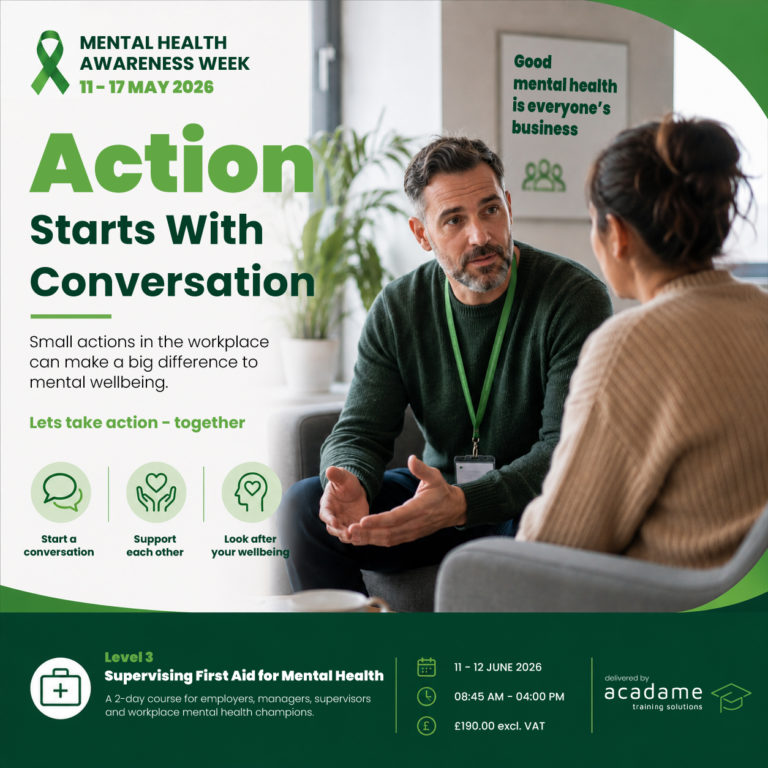
Supervising First Aid for Mental Health is the two day course built for managers and supervisors dealing with exactly this, and stress management and coping with pressure covers the day to day end.
If you need support now. Samaritans are on 116 123, free, at any hour. Text SHOUT to 85258 for a text conversation. For urgent NHS mental health help, call 111 and select the mental health option. In an emergency, 999. If you are struggling, your GP is a good place to start and is not a fuss.
Find a date that works
Every course, every centre, with live availability and prices.
On your site or ours, and group rates on request.